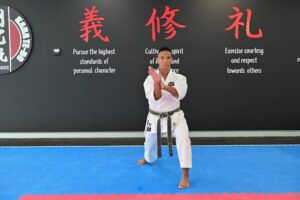
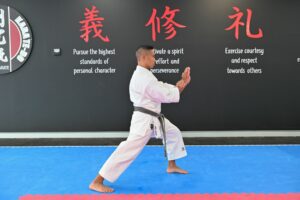
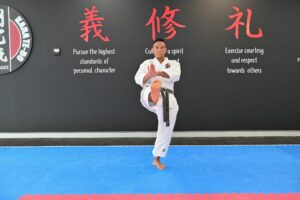
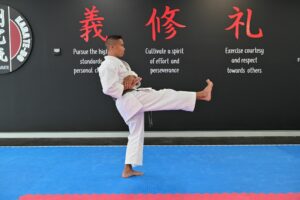
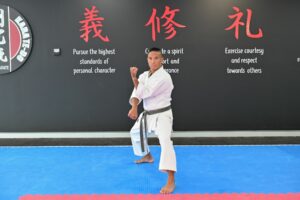
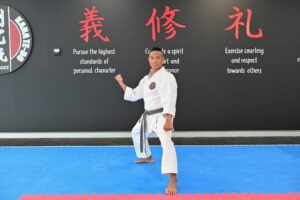
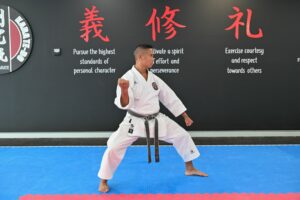
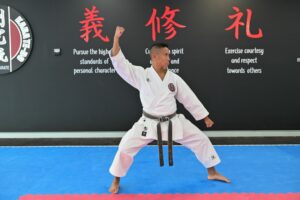
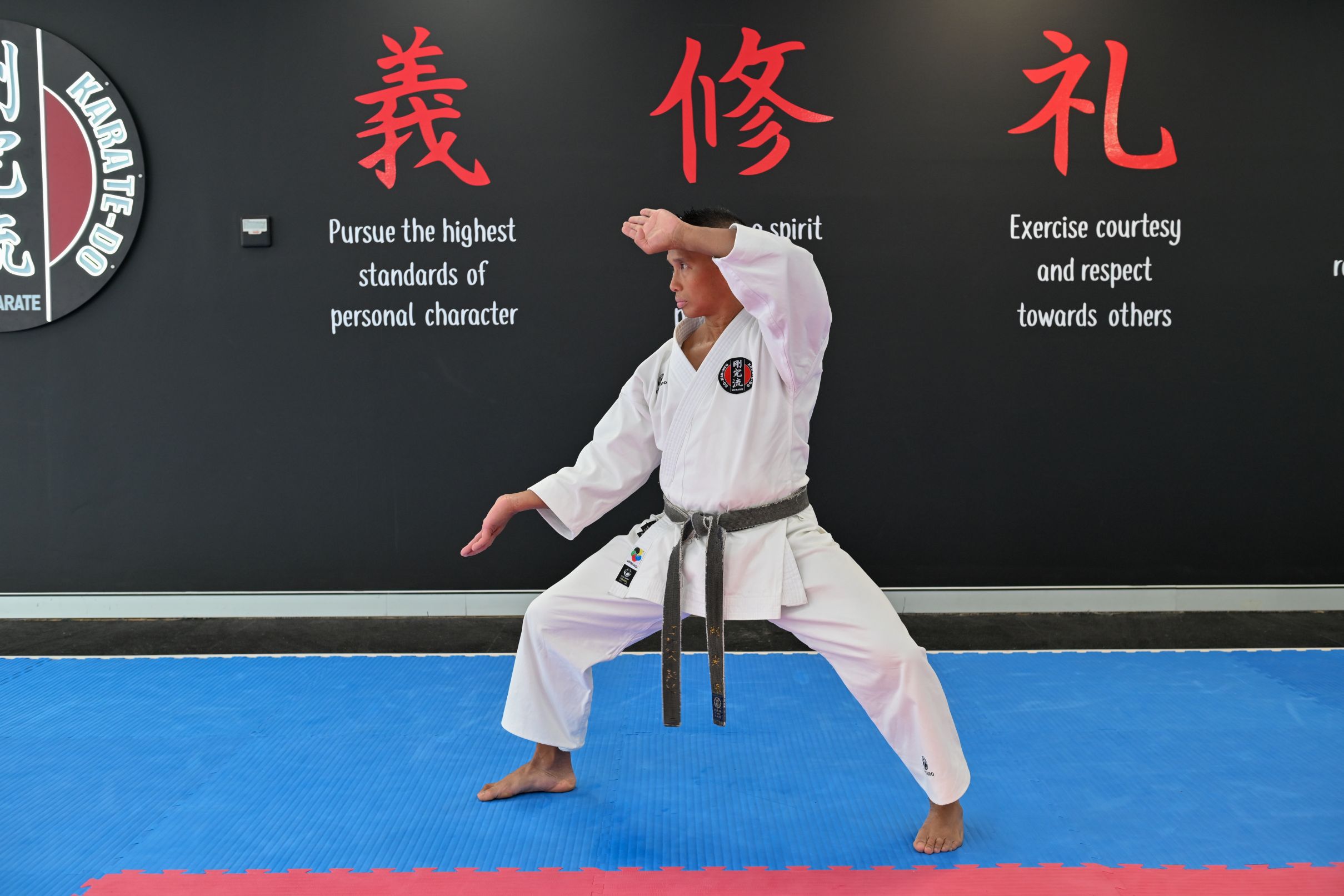
For students who have reached Nidan (2nd Dan) Kanku-sho seemed a perfect choice to put alongside Shisochin due to its contrast in timing, muscle movements, technique (and the way in which techniques developed their power) and fighting philosophy. Often recognized by its difficult jumps, Kanku-sho follows a very similar embusen (performance line) to Kanku-dai. It is a very physically demanding kata, just like Kanku-dai, encompassing long, well grounded stances; focusing on moving between these with explosive speed using dynamic hand and foot techniques. It also requires agility, moving in between stances without pause and hosts a number of fast 180 degree turns.
As a Nidan kata, Kanku-sho further challenges a student beyond Kanku-dai as it often combines 4, 5 and 6 techniques together in rapid movement. Students demonstrate self-mastery by their ability to perform fast and explosive combinations while maintaining good form and technique. The kata was created by Master Itosu. Itosu was also responsible for creating the five famous Heian kata.
GKR Karate – Kanku-Sho
Note that the techniques in Kata are generally assigned Kihon names (eg strikes and blocks) despite the fact than they are rarely (if ever) used this way in application
- Counts 1, 2 and 3: Morote Uchi Uke (Reinforced inside forearm block)
- Counts 7 and 12: Morote Kake Uke (Reinforced hooking-seizing block)
- Counts 8, 13 and 27: Mae Geri (Front kick) with double Hikite (pulling hands)
- Counts 8, 13 and 27: Otoshi Uraken (Downward Backfist Strike)
- Count 9: Uchi Uke (Inside hooking block) and double Chudan Uke (stomach level punch)
- Counts 10 and 15: Chu-ge Manji Uke (stomach, groin vortex block)
- Counts 17 and 19: Jo-ge Manji Uke (Head-groin vortex block)
- Count 18 and 20: Tetsui (Hammer fist strike) with Kage Tsuki (Hook punch)
- Count 21: Mawashi Jo-ge Uke (Turning head-groin block)
- Count 29: Jump preparation
- Count 30: Touching the ground prior to Gedan-shuto Uke (groin level knife hand block)
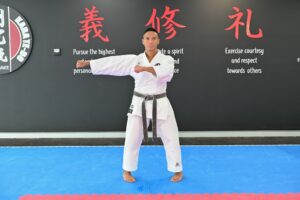
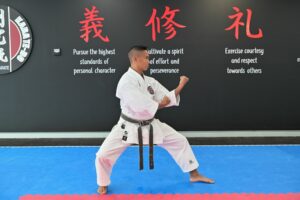
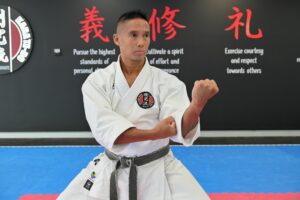
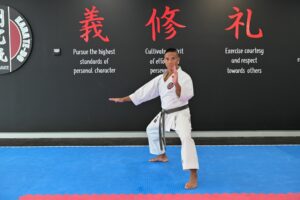
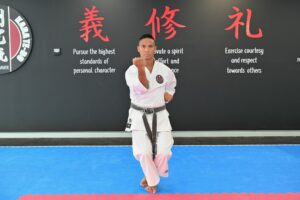
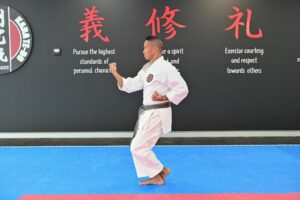
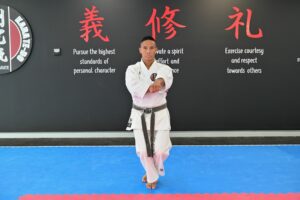
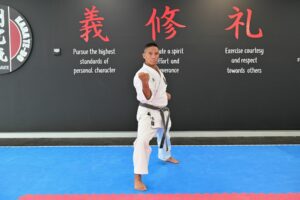
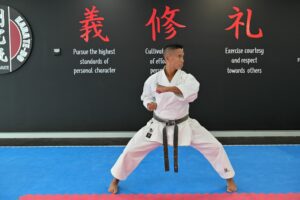
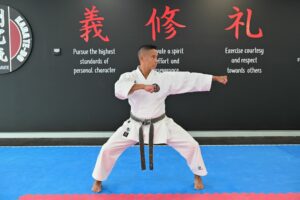
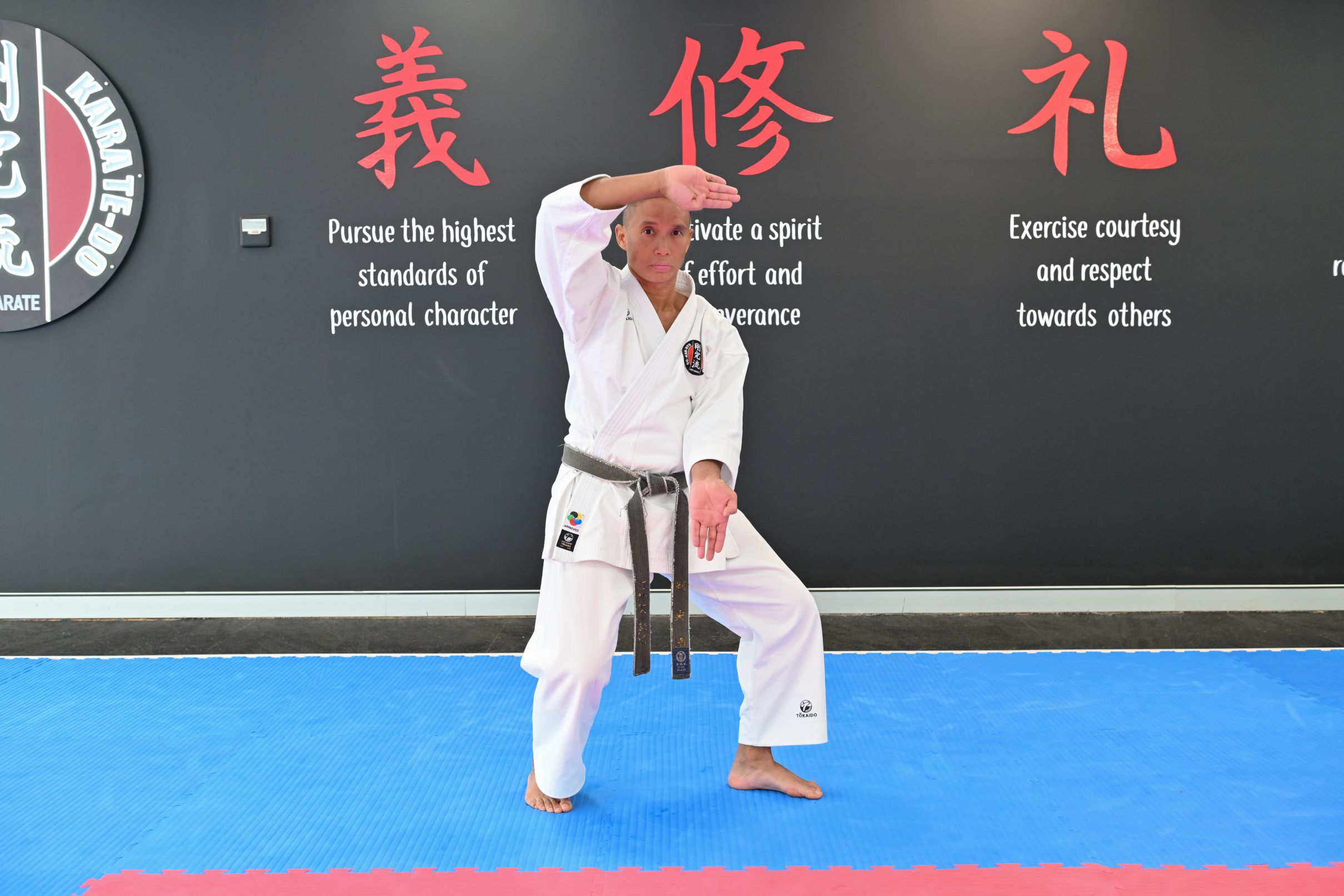
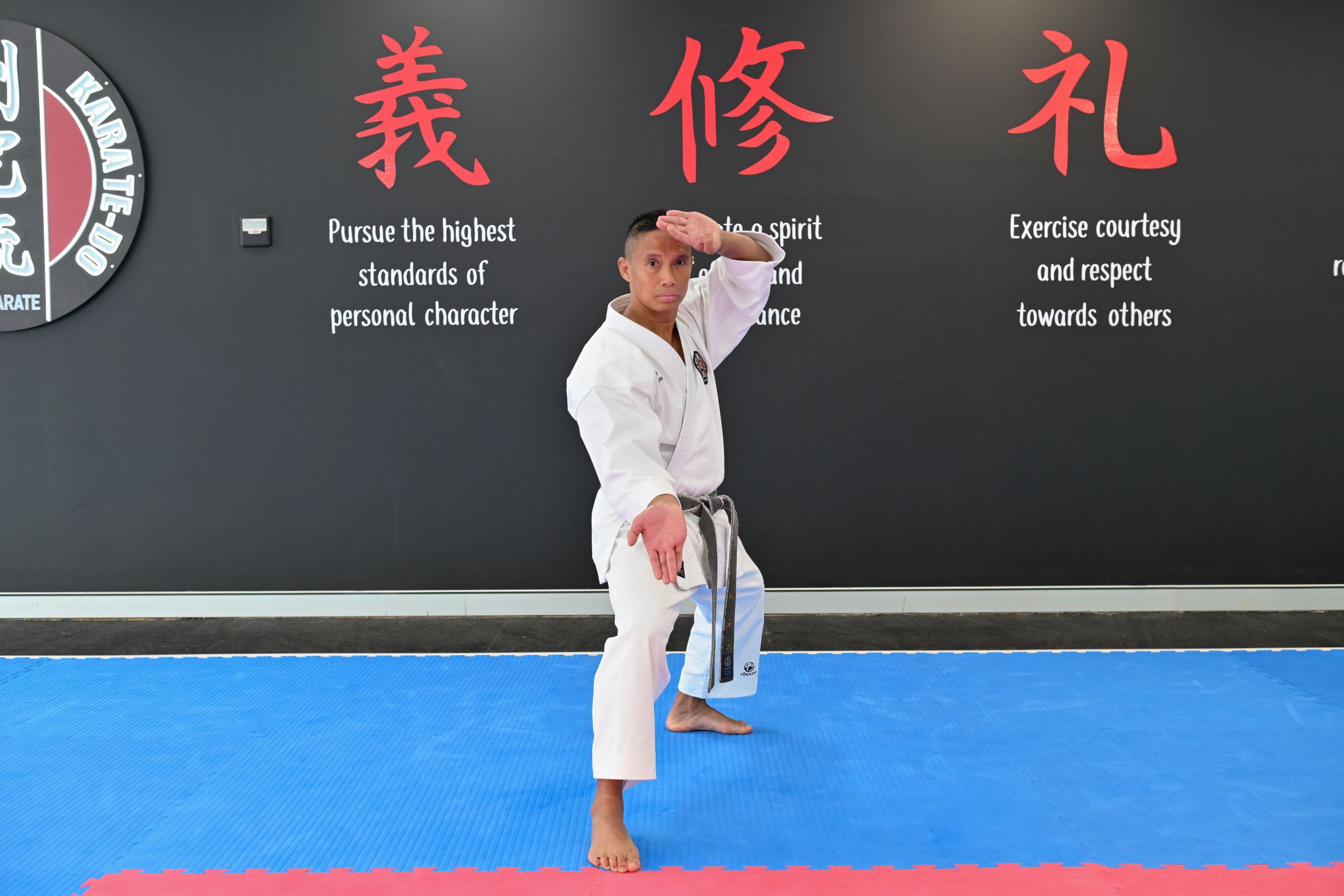
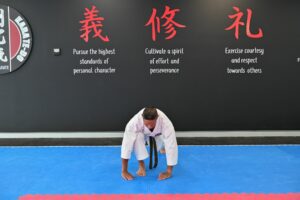
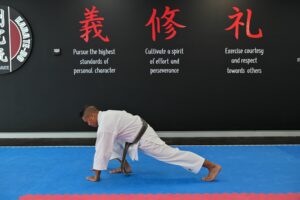
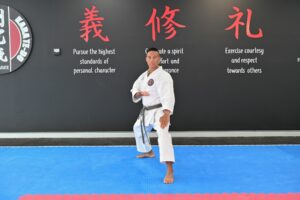
Kanku-sho History
Kanku-sho was created in Okinawa by Sakugawa, who formulated the kata to honour and record what his instructor (Kusanku) had taught him.
‘Tode’ Sakugawa was the first martial arts teacher of the legendary Bushi Matsumura (who became Sakugawa’s student whilst he was a child). Matsumura later became the instructor of Yasutsune Itosu (teacher of Gichin Funakoshi) teaching him Kusunku (which later became known as Kanku-dai). Itosu created the Sho (lesser) version of Kusanku and it was taught extensively by his most advanced student, Chibana (founder of kobayashi-ryu). Later, Gichin Funakoshi also modified it by taking the cat stances and altering them to longer, back stances. He also changed the name from Kusunku-sho to Kanku-sho. On a side note, Itosu also created a Sho (lesser) version of Bassai-dai.
Today, many styles practice both the lesser (Sho) and greater (Dai) versions of the form while some only practise the ‘Dai’ version. In GKR, we practice both the ‘Dai’ and ‘Sho‘ versions of the Kanku kata, but only the ‘Dai’ version of the Bassai kata.
What fascinates many modern martial artists is why Itosu created two new very similar kata from pre-existing classical kata? Once again this has been a much-debated topic. Some argue that as Itosu was famous for being instrumental in the introduction of karate in the public school system, the ‘Sho’ kata were less concerned with combat and more concerned with physical exercise. It is more likely however that he designed the Heian kata to serve this process.
What is more plausible however, is that at the time (late 19th century) there were over 20 classical Bo-jutsu (long staff) kata practiced in Okinawa indicating that many conflicts would have involved someone possessing a Bo. Considering that the majority of the bunkai in both Bassai-sho and Kanku-sho effectively defend against a Bo staff (while the ‘Dai’ versions work more effectively in unarmed combat) it seems reasonable that Itosu would have taken the classical kata and, while adhering to the fighting principles within, modified these to train students in defence against this now popular weapon.
Kanku-Sho Lineage
Kusunku (or Kung Siang Chin)
Kusunku was a Chinese military advisor who came from China to Okinawa at the request of Okinawa’s king. He lived in Okinawa from 1756-1761. He was a master of Kempo.
‘Satunushi’ ‘Tode’ Sakugawa (1733-1815)
Sakugawa was a student of Takahara and the Okinawan teacher of Sokon Matsumura. Takahara suggested that his student, Sakugawa, go to train with Kusunku. Sakagawa formulated the ‘Kusanku’ kata to honour his teacher (Kusunku) and record his teachings after his death.
Sokon “Bushi” Matsumura (1796-1893)
Sokon was a student of Sakugawa and teacher of Itosu. Matsumura taught Itosu the kata Kusunku (later known as Kanku-dai) among others.
Yatsutsune “Ankoh” Itosu (1830-1915)
A student of Sokon Matsumura’s, Itosu created the ‘Sho’ (lesser) version of Kusanku (possibly to counter the then popular use of a bo staff in combat).
Gichin Funakoshi (1868-1957)
Funakishi founded Shotokan karate (incorporating ‘Kusunku’ but changed the name to ‘Kanku’). Funakoshi adopted both the ‘Dai’ (greater) and ‘Sho’ (lesser) version of the Kanku kata into his style, although modified the cat stances into back stances.
GKR Karate
While many styles incorporate Kanku-sho, GKR derives its from Shotokan karate.