Introduction to Kata Nikan-Te | GKR Karate
GKR Karate
  • About GKR

    About GKR

    GKR Karate is a family club that is dedicated to fostering sound values and developing strong, humble, brave individuals and healthy communities.

    • What is Karate?
    • GKR Karate Club Info
    • Karate for Everyone
    • GKR Karate Belt Journey
    • Events
    • Executive Committee
    • GKR Karate History in Australia
    • Regional Managers AUS
  • Locations
  • Tournaments
  • Shop
  • Articles
  • Contact Us
  • TRY A FREE CLASS
    • Instructor Login
    • Australia
    • New Zealand
    • United Kingdom
GKR Karate
    • About GKR
      • About GKR
      • What is Karate?
      • GKR Karate Club Info
      • Karate for Everyone
      • GKR Karate Belt Journey
      • Events
      • Executive Committee
      • GKR Karate History in Australia
      • Regional Managers AUS
      Back
    • Locations
    • Tournaments
    • Shop
    • Articles
    • Contact Us
      • Australia
      • New Zealand
      • United Kingdom
    • TRY A FREE CLASS Instructor Login

Introduction to Kata Nikan-Te

  • Home
  • About GKR
  • Black Belt 4th Dan & Above
  • Introduction to Kata Nikan-Te

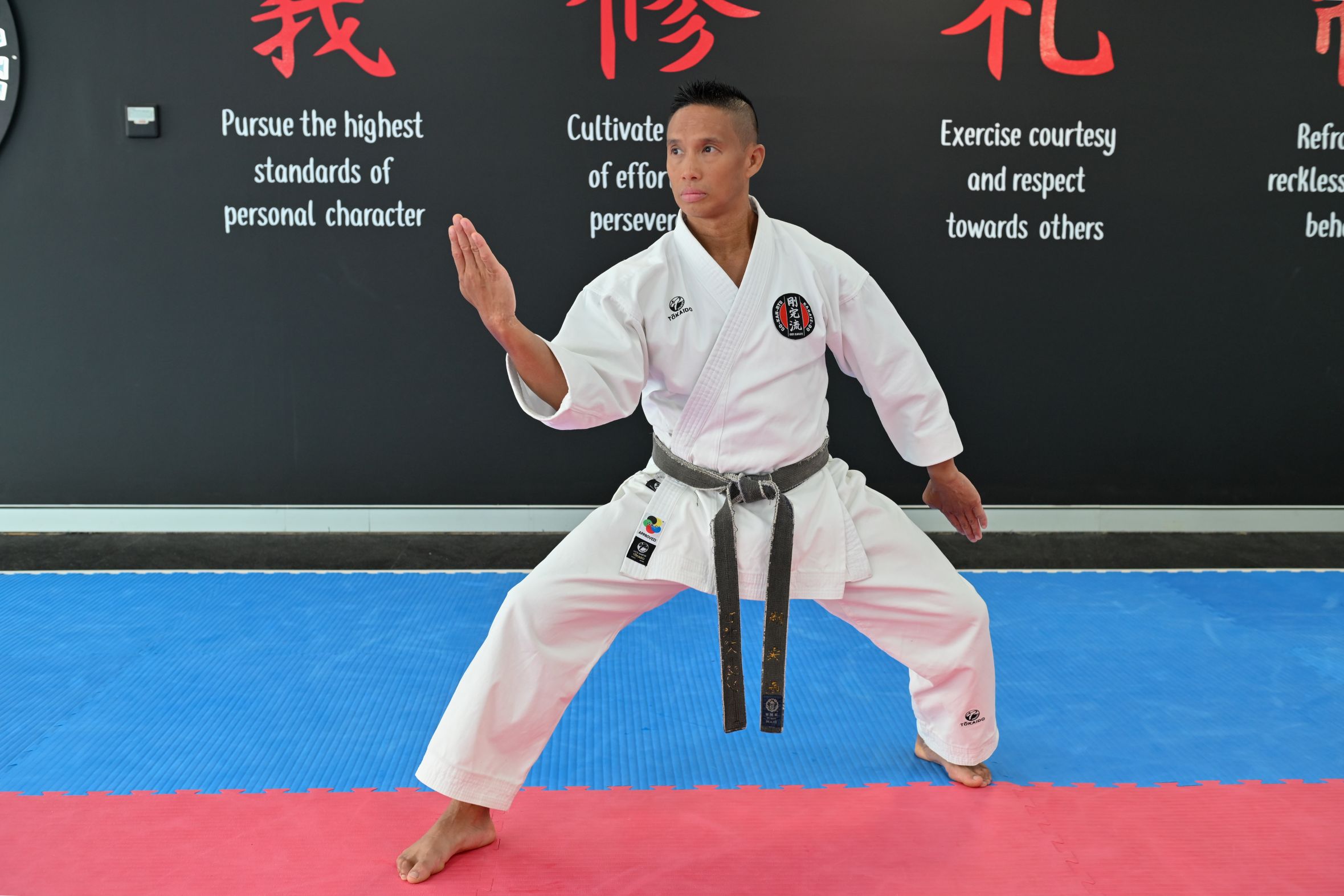
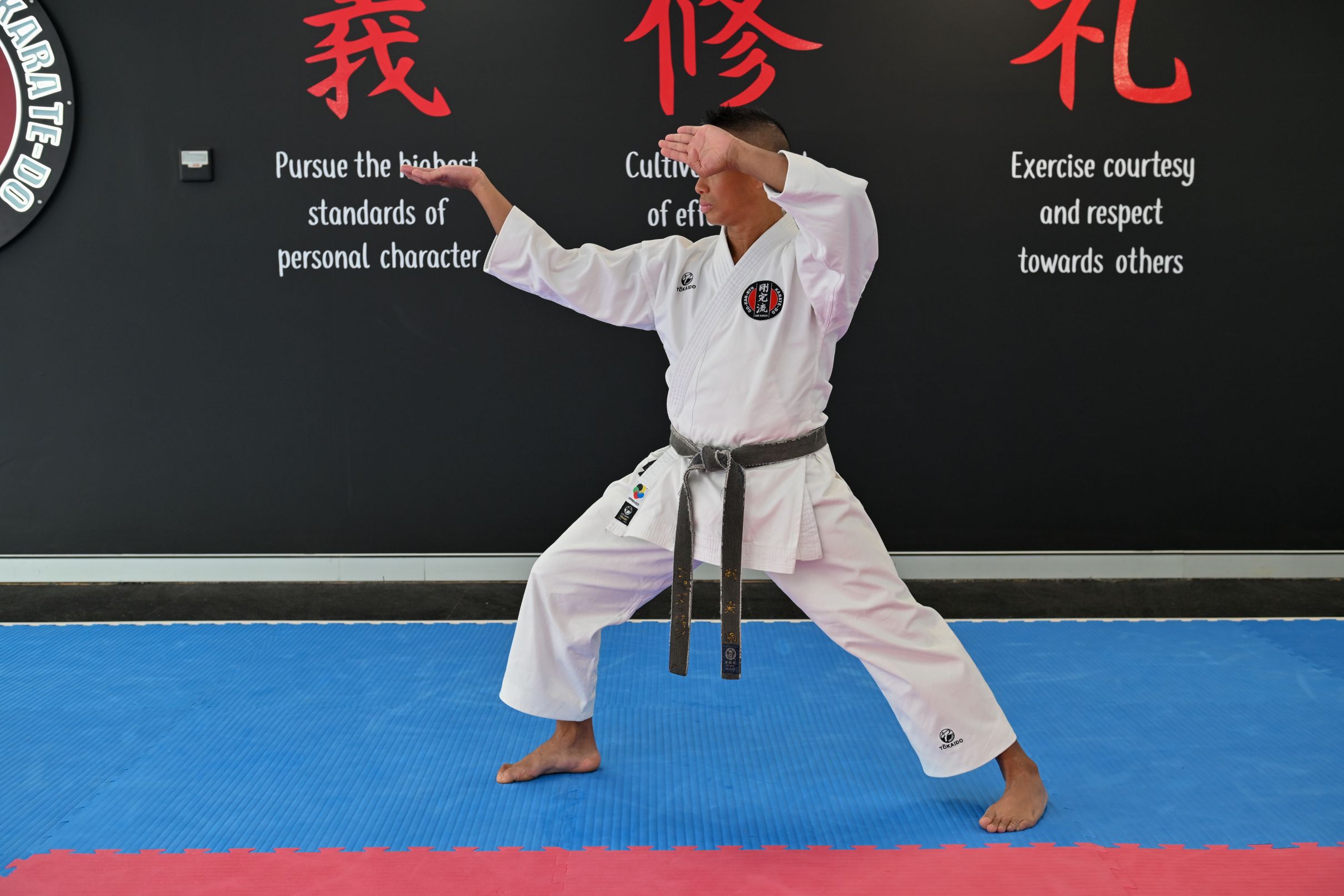
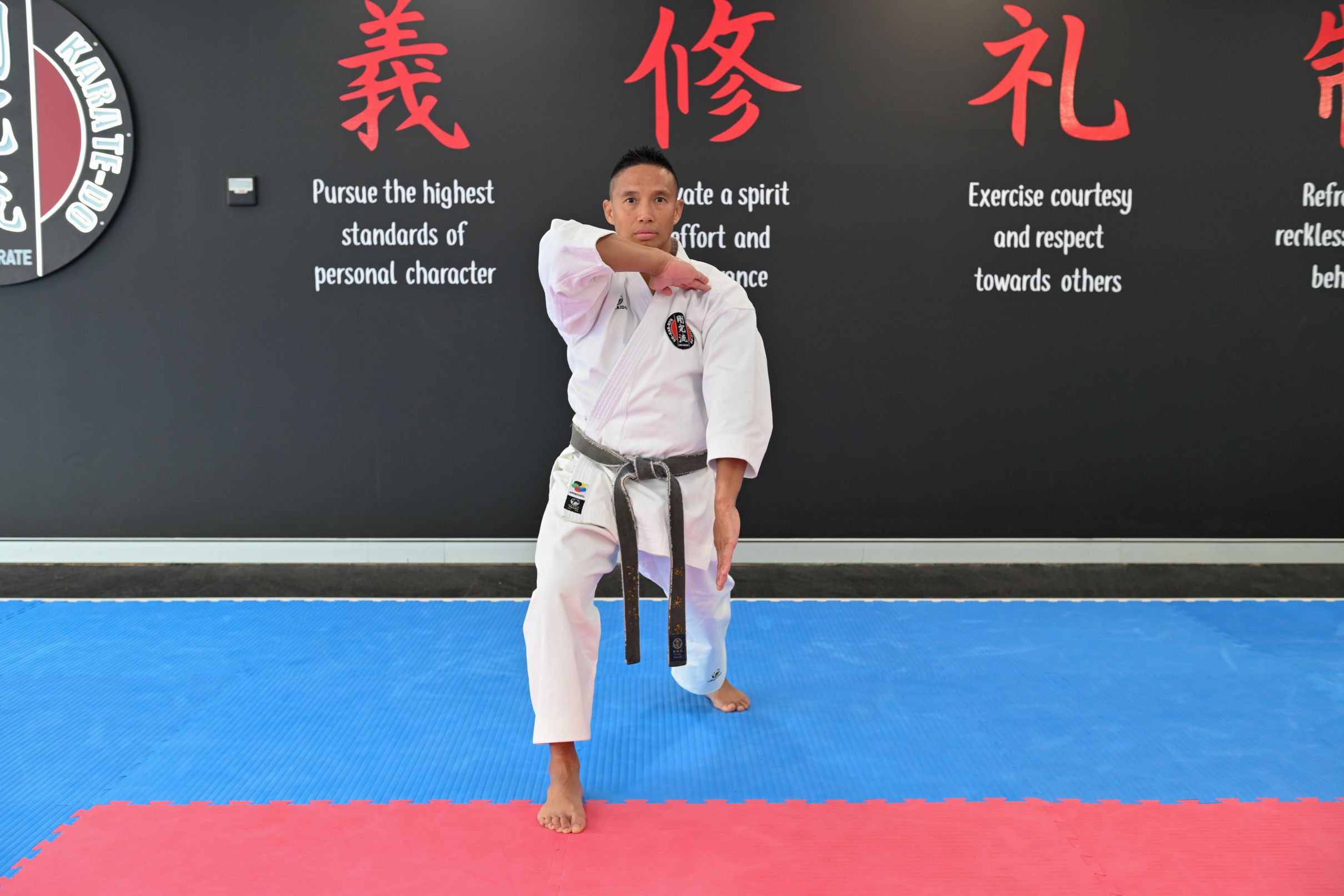
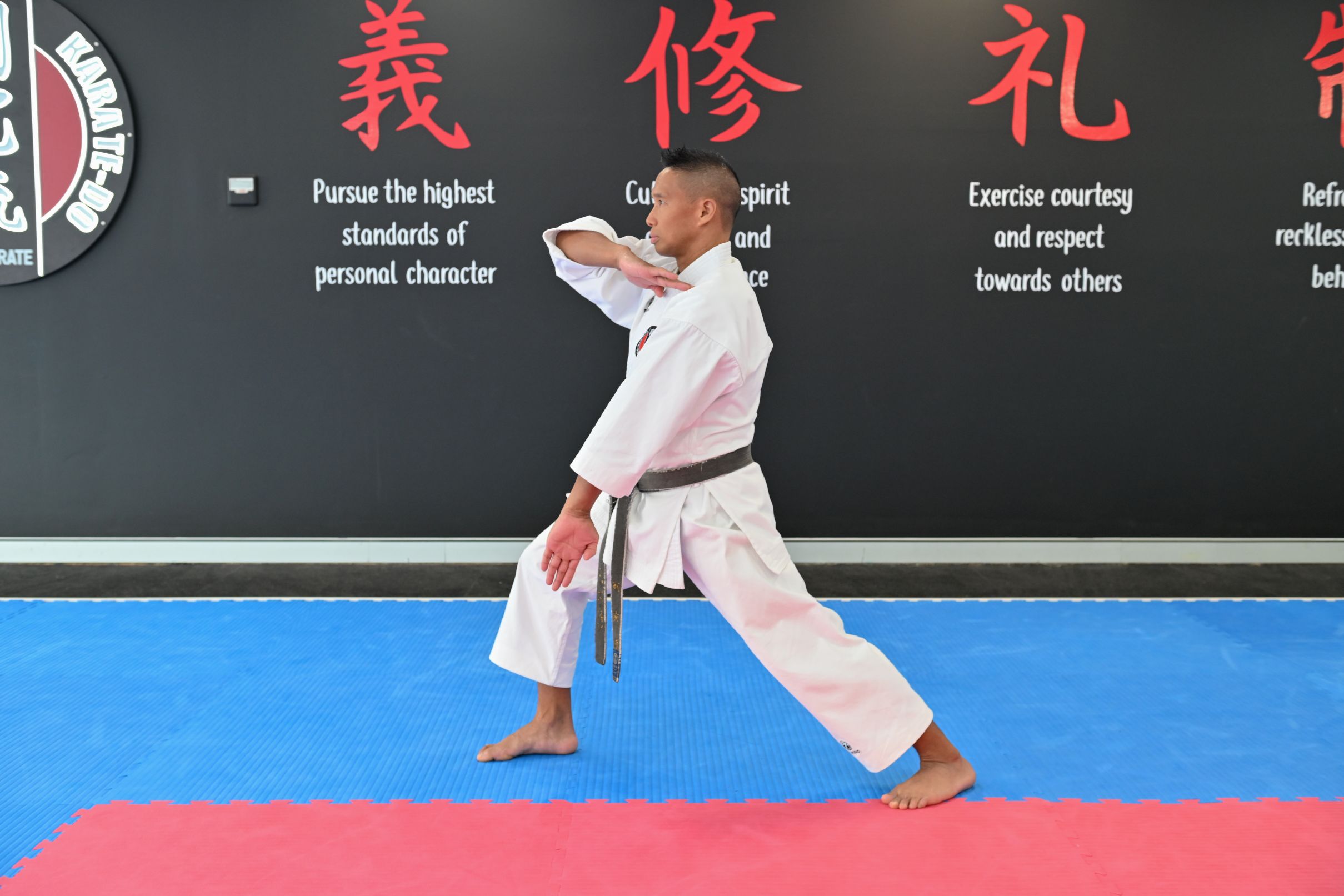
Created 3-4 years after Shokan-te, Kancho’s second kata Nikan-te, is a kaishugata (open hand kata). As with his first kata, Kancho never intentionally set out to create Nikan-te. The kata took shape one day as he was doing home training and practising some of his favourite techniques. As the kata unfolded, Kancho realised that it was all open handed and contained some of his most used kumite techniques.

With Haito being one of Kancho’s favourite techniques, it features quite a lot in Nikan-te, with combinations striking high then low which is a reflection of how Kancho spars. Nikan-te develops orientation and an awareness to the effectiveness of open hand techniques, striking vulnerable areas of the opponent.

When creating a kata, Kancho Sullivan explains that it is a very natural and organic process. He doesn’t set out to create a kata, or with an idea for it to be included in the GKR syllabus. Instead, he lets the moves flow naturally and from within using muscle memory and favourite techniques to create practical kata that provides an insight into Kancho’s kumite style.

Whereas Shokan-te is a kata that presses forward, Nikan-te moves forward and backward, always flowing and without pauses, mirroring kumite between two people.

Practitioners should work towards flowing seamlessly from one technique to the other with smooth transitions between stances to hardwire their subconscious responses to be accessed in kumite or self-defence situations.


GKR Karate – Nikan-Te


Tips for Nikan-te
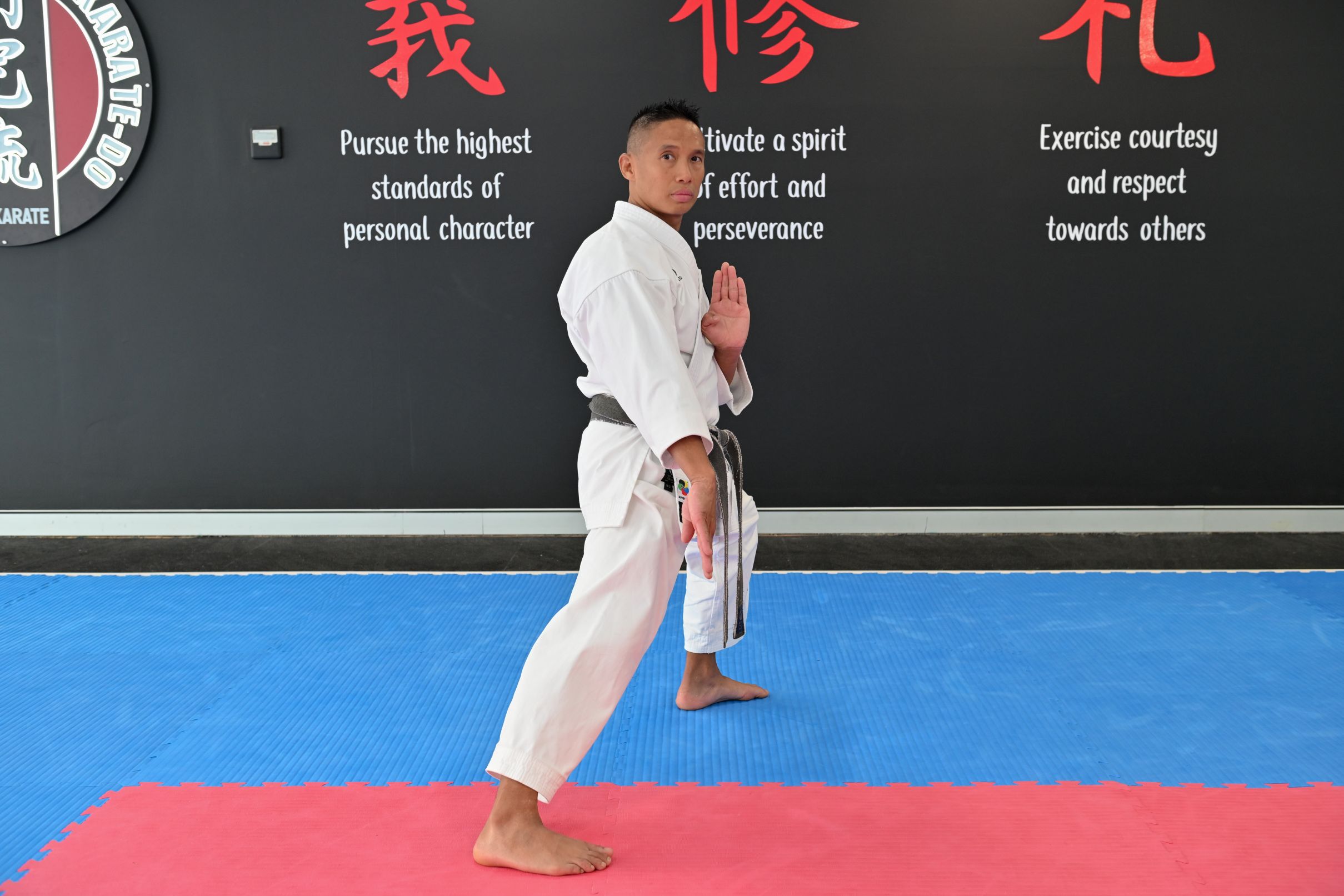
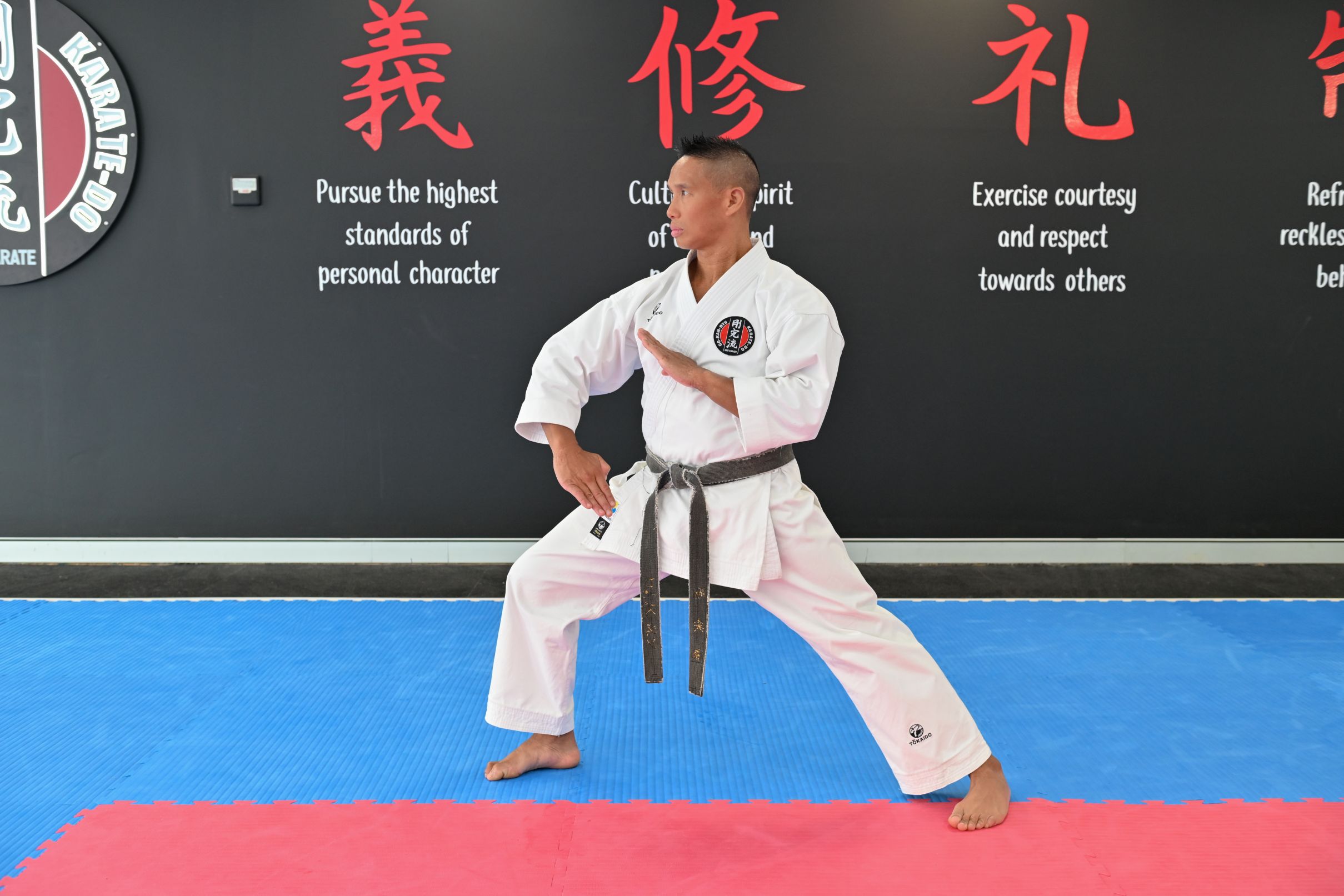
  • Counts 1 and 3: Lean with Kaishu Gedan Uke (Open-Hand Sweeping Block)


    • The stance is a Naha-based Kokutsu dachi (which is an inverted Zenkutsu dachi). This is also found in count 5 of Sepai.
    • Count 1 steps with the right leg and count 3 steps with the left leg.
    • The stepping leg creates a two-shoulder width length but also moves back and across to become one shoulder-width wide (hence an inverted Zenkutsu dachi).
    • This Hikite hand is open and vertical (similar to the Hikite in Kake uke)
    • The Gedan Uke sweeps from the rear of the leg to the front of the leg, finishing underneath the Hikite hand.
    • Looking 45 degrees, to the direction one is about to step to on the next count.
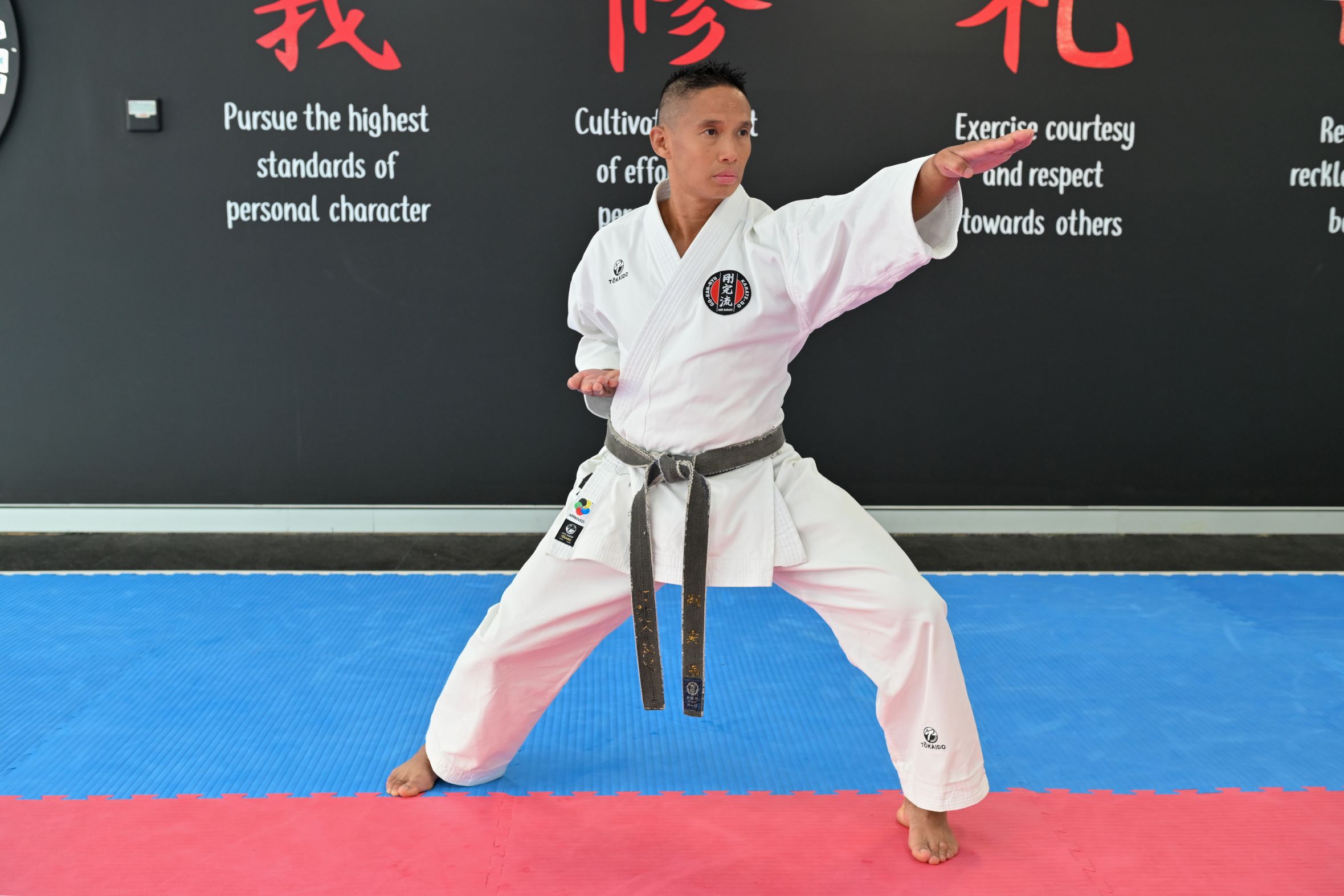
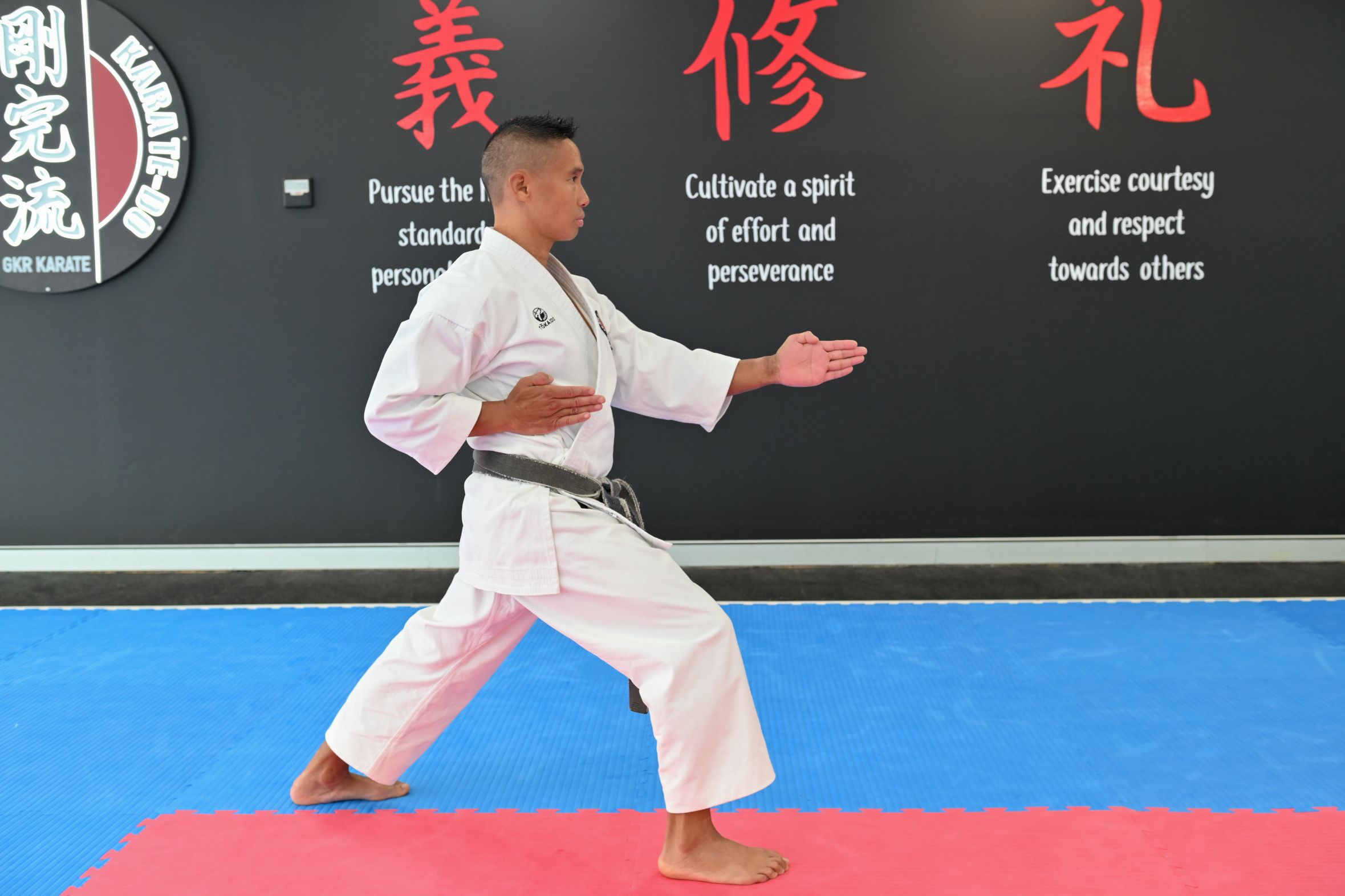
  • Counts 2 and 4: Preparation and Execution for Jodan Haito Uchi


    • As we step into counts 2 and 4, the Kaishu Gedan uke hooks up (as if to catch a front kick).
    • The catching hand only comes up around shoulder height.
    • As the Kaishu Gedan uke hooks to catch, the other hand drops behind to prepare for the Haito. It should not prepare up behind the back, but stay low.
    • Stepping into the first Haito uchi of counts 2 and 4, the back leg should remain bent, and the hips are 45 degrees. This allows the second Chudan Haito uchi to have more power as the back leg pushes to straighten as the hips rotate to square.
    • The Haito can be temple or jaw height with the thumb tucked into the palm to allow the ridge of the hand to strike. However in application, the forearm bone would be used to strike and open hand free to then grab afterwards.
    • Both the wrist of the Haito and open Hikite hand should be flat.
  • Counts 7 and 10: Gyaku Soto Shuto Uchi (Rear Arm Outside Knife Hand Strike) with Kaishu Gedan Barai (Open-Hand Downward Block)


    • Count 7 is toward the rear corner of the dojo and count 11 is toward the front corner of the dojo, with both counts having the right leg forward in Zenkutsu dachi.
    • Both hands finish simultaneously with the stance.
    • Both the Shuto uchi and Kaishu Gedan barai should prepare at their usual preparation points despite having to do a front kick while moving into stance.
    • The Shuto uchi should be parallel to the floor (wrist bent) and aimed toward either the temple or jaw.
    • The Kaishu Gedan barai should finish just to the outside of the front knee (identical to the position of a closed hand downward block).
    • Hips can turn slightly off as the hands prepare but must land square as the hands finalise into the strike and block.
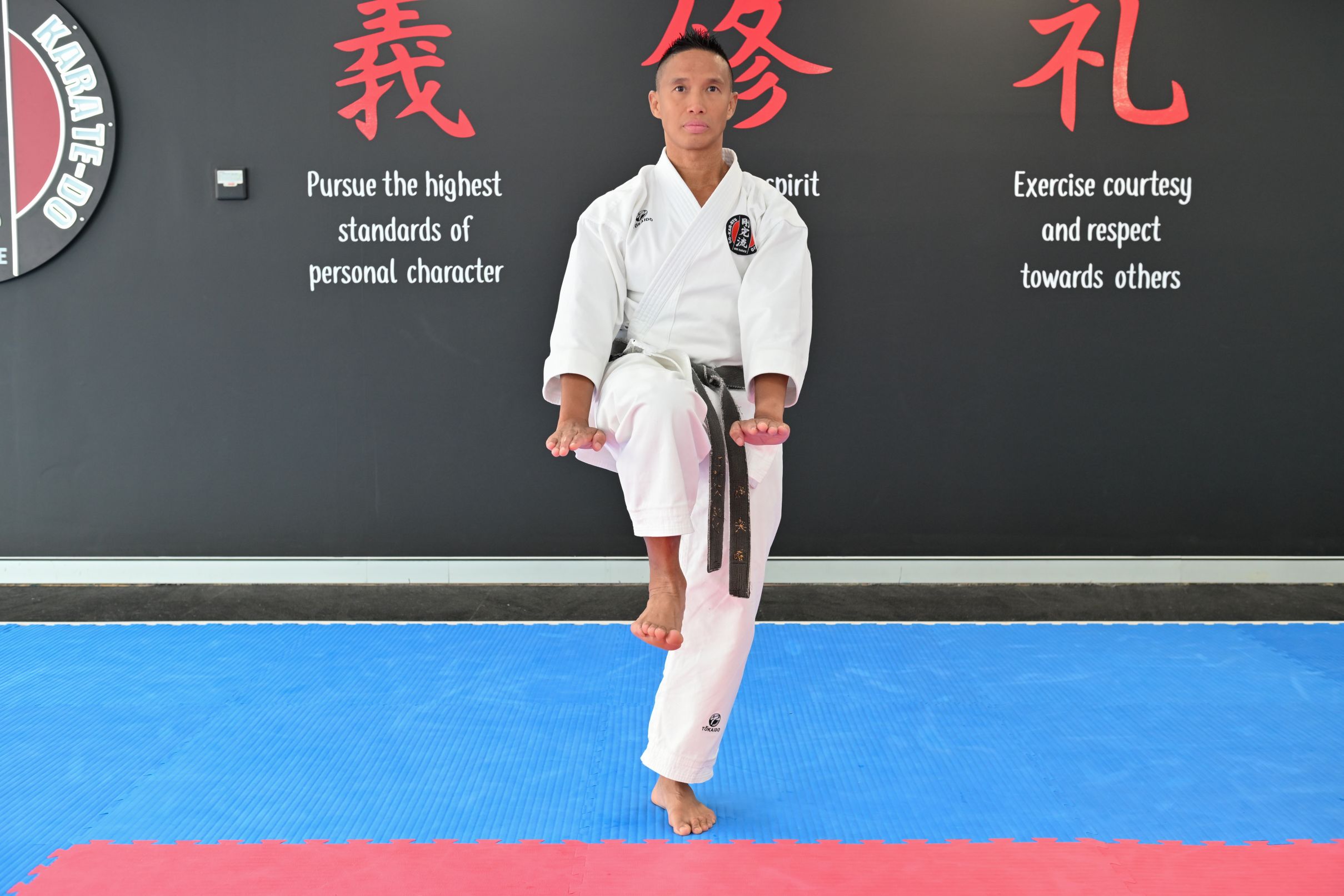
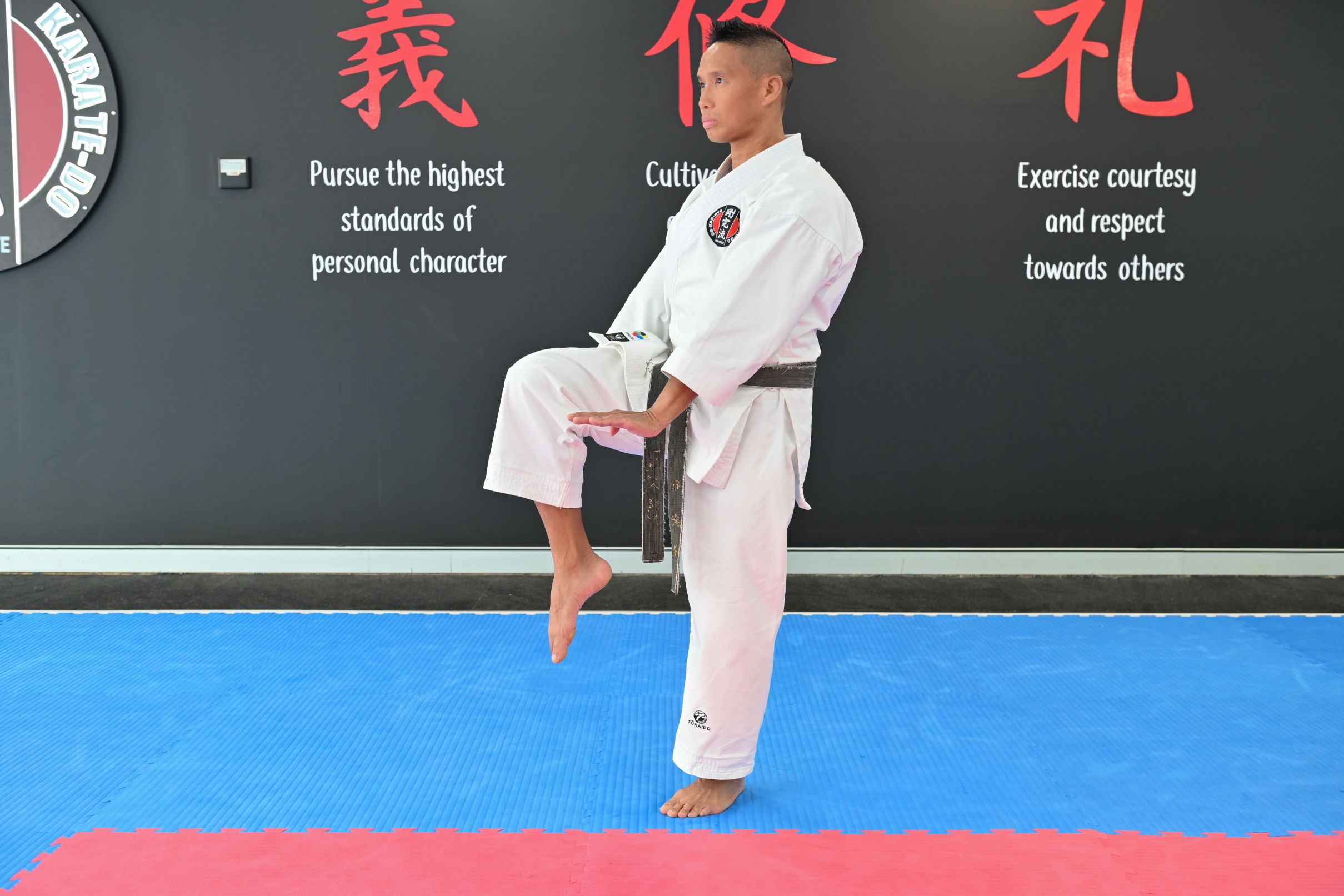
  • Counts 8 and 11: Hiza Geri (Knee Strike) with Otoshi Hikite (Downward Pulling Hands)


    • Count 8 uses the left leg and moves toward the rear corner of the dojo. Count 11 uses the right leg and moves toward the front corner of the dojo.
    • Kancho Sullivan specifies the foot of the leg that executes the Hiza geri can be toes up or toes pointed down. Each student may choose.
    • The hips are square for both Hiza geri.
    • The base leg remains slightly bent to avoid coming up too much in height while executing the Hiza geri.
    • Both hands pull down while the knees raise. Pull with the palm heels so the fingers are facing forward. They finish slightly below the knees.
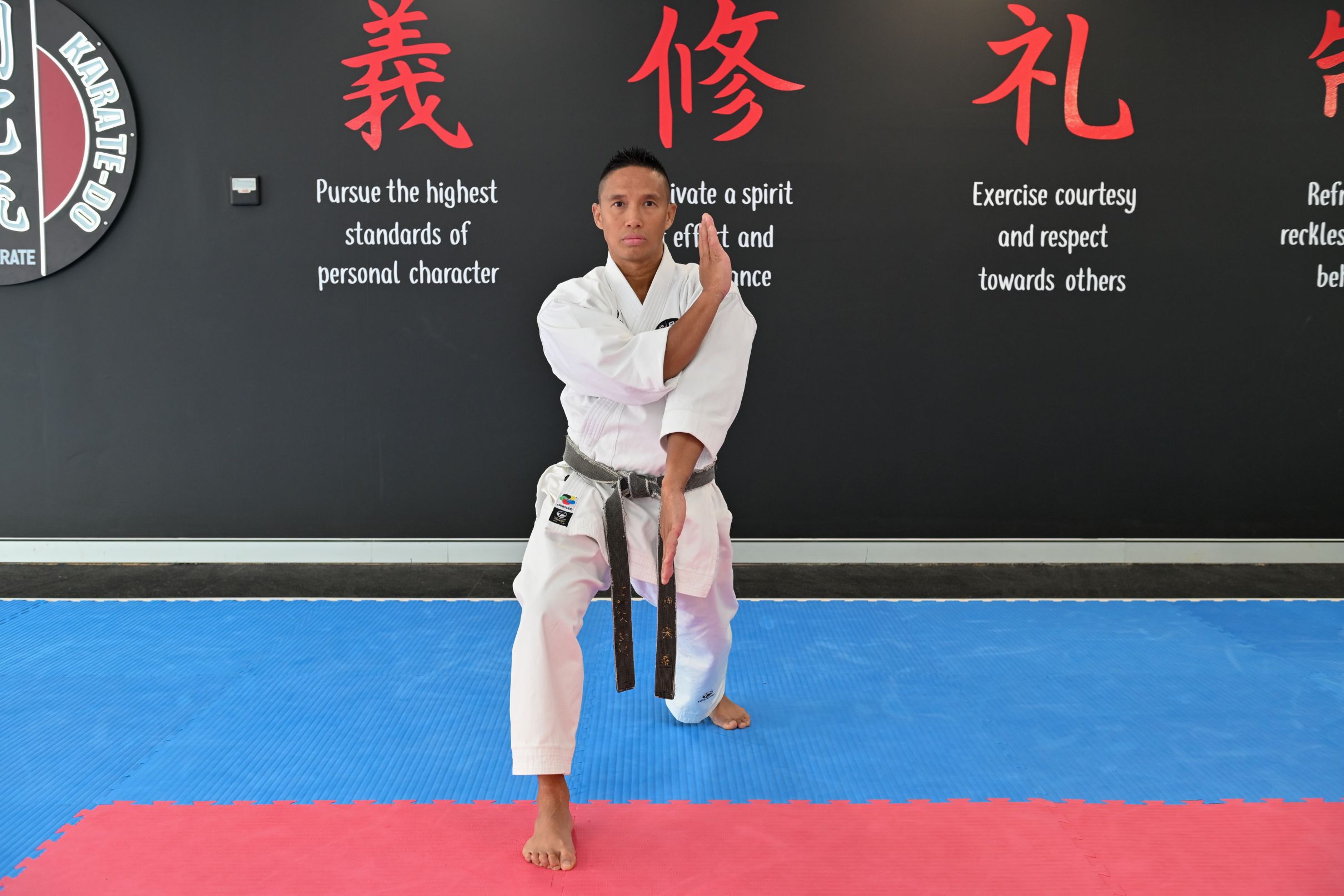
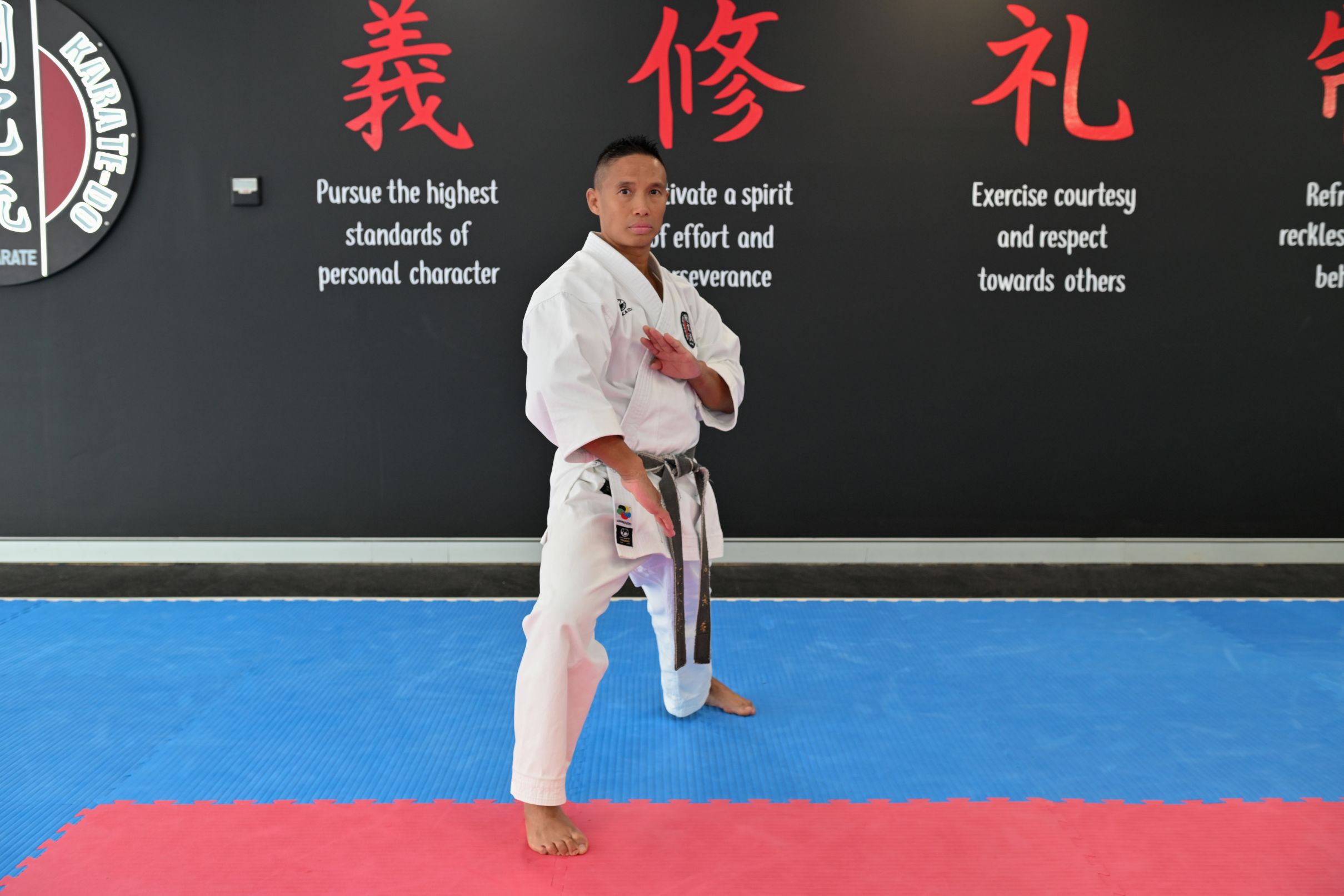
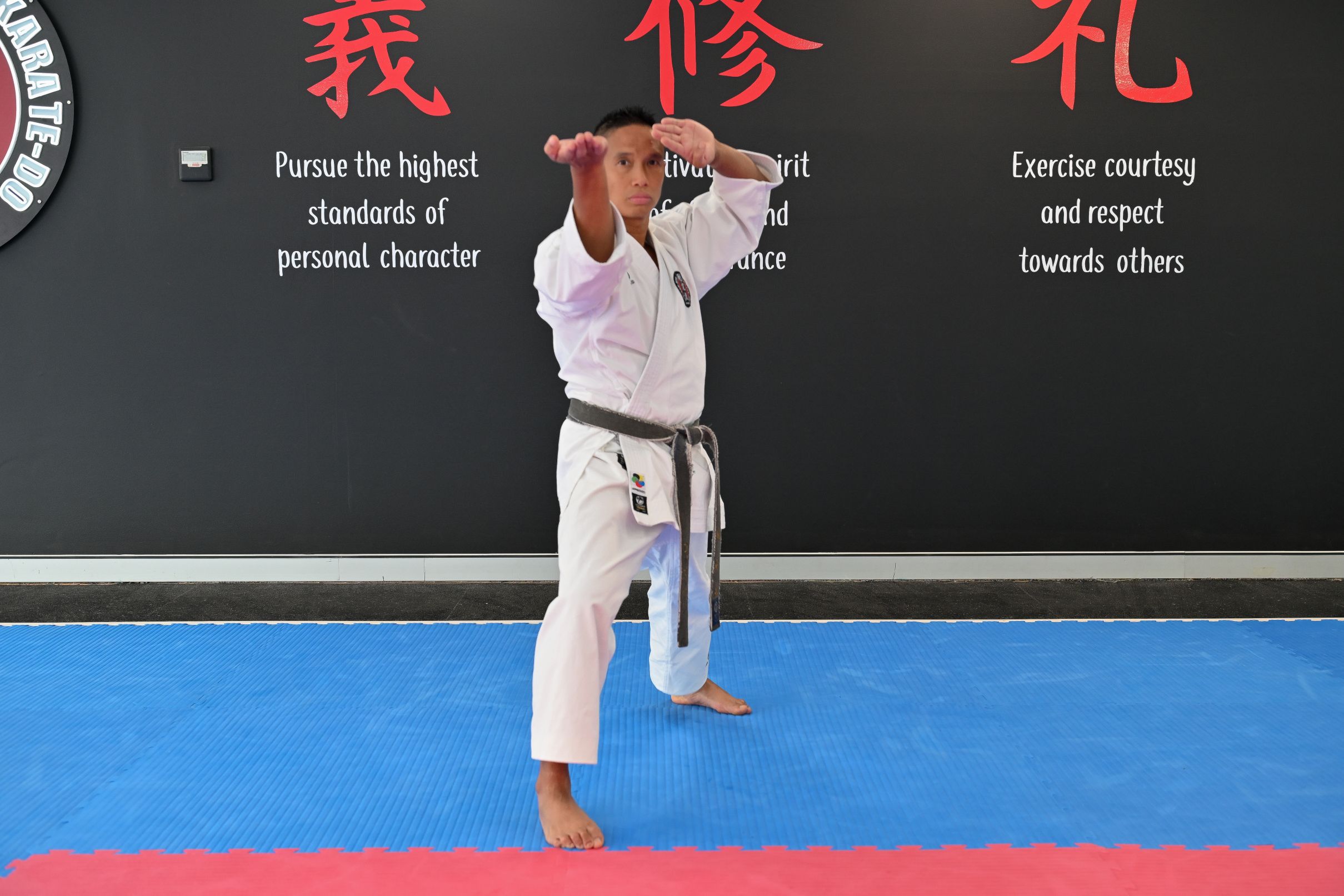
  • Counts 13, 14, 19 and 20: Oliva Uke


    • Oliva uke is named after Sensei Antonio Oliva, a famous Spanish karateka who uses this block as a defence for all styles of attack. Kancho picked this block up from his training with Antonio sensei and adopted it into his fighting style. It appears on two occasions in Shokan-te and four occasions in Nikan-te.
    • Both the left and right shoulders should try to remain as down as possible, although in application the shoulder would often raise.
    • The upper hand leads with the palm facing out (fingers vertical) as this creates a stronger defence than the palm facing inward. It should come across over the opposite shoulder and be head level.
    • The downward arm covers the entire side of the torso. In Kata the arm remains straight and palm outwards, although in application the downward arm and hand could have a variety positions, depending on context.
    • The hips should be square to the front, which allows them to be ripped to 45 degrees to complete the Gedan Uchi shuto uchi straight after.
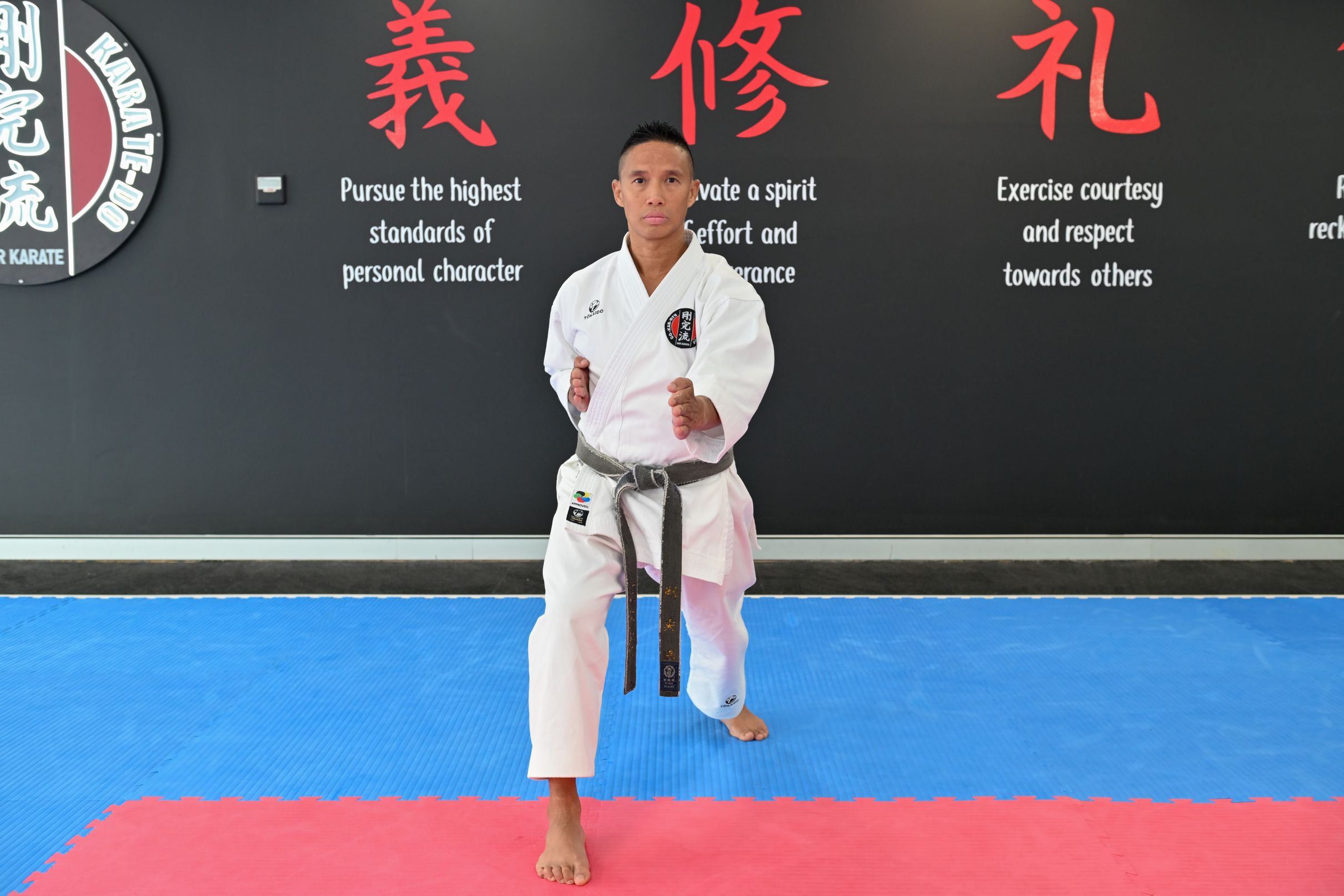
  • Counts 13 and 14: Retracting Gedan Uchi Shuto Uchi (Groin Level, Inside Shuto Strike)


    • The term “Uchi” can mean both “inside” as well as “strike”. While they are identical in english, the Japanese kanji is different. ​Uchi as “Inside” (內 – Uchi), while Uchi as “Strike” (打ち – Uchi)​
    • Count 13 is with the right leg forward, while count 14 is with the left leg forward in Zenkutsu dachi. The hips are 45 degrees.
    • The Hikite hand is NOT similar to Kake uke as the wrist is straight, keeping the Hikite hand on the same angle as the forearm.
    • Uchi Shuto uchi generally remain extended with Kime, however in this instance the striking hands retract back, but only enough to create a right angle in the striking arm.
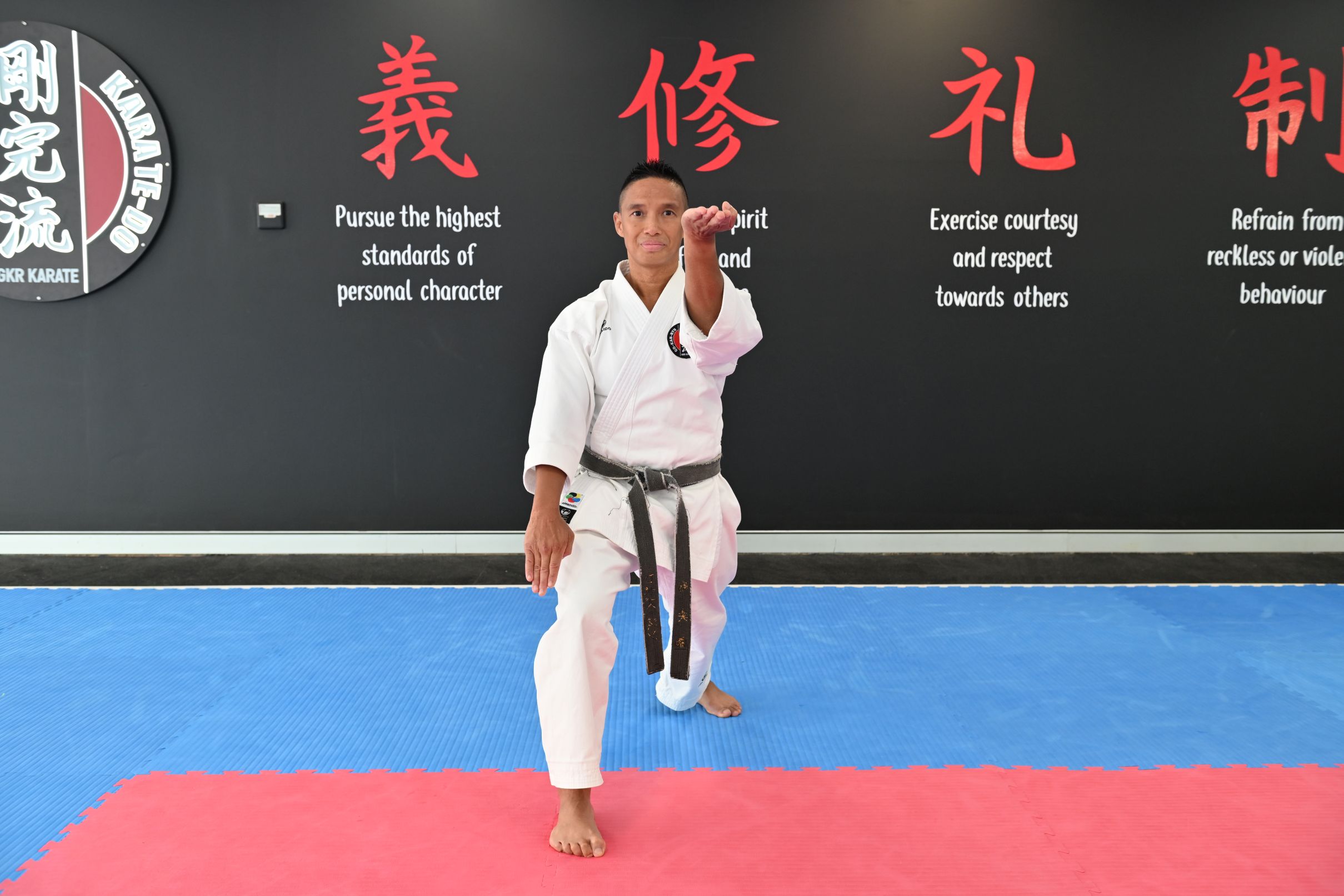
  • Counts 15 and 17: Yon-Hon Nukite (4 Finger Spear Hand Strike)


    • Count 15 is with the right leg forward, moving to the back of the dojo. While count 17 is with the left leg forward, moving toward the front of the dojo.
    • The Yon-hon nukite does NOT aim to the centre, it extends out straight from the Hikite position.
    • The striking arm is chudan level and should be slightly bent. The bend in the arm is slight, similar to how it is used in Kankudai (not as bent as it is in Sochin). However, unlike Kankudai, it is coming from the rear arm.
    • The Hikite hand is open and at the traditional position (floating ribs) however the palm is pointing toward the body (making both hands parallel).
    • Counts 15 and 17 both comprise of a 4-move combination. The spear hand is the final move of this combination.
    • The first three moves of the combination are with the opposite hand (over the front leg) and should be executed with the hips in Hanmi (45-degrees) position. The spear hand is executed with the rear hand and is supported by the hips driving forward to Shomen (facing forward) position.
  • Counts 16 and 18: Soto Shuto Uchi (Outside Knife-Hand Strike) with Kaishu Jodan Age Uke (Open-Hand Rising Head Block)


    • Count 16 is with the right leg forward, while count 16 is with the left leg forward.
    • The hands land simultaneously with the Zenkutsu dachi, while the hips are in Hanmi (45 degrees) position.
    • The Soto shuto is with the front hand. During preparation, the hips should be square. This allows both the Shuto to prepare properly and for the hips to drive forward into Hanmi position to add extra power.
    • The Shuto is aimed towards the temple or the jaw. The arm is slightly bent, as is the wrist, allowing the hand to finish parallel to the floor.
    • The open blocking hand prepares like a regular Jodan Age uke but it’s not compulsory to touch the opposite shoulder. As the hips are 45 degrees, so too is the forearm and hand.
  • Counts 19 and 20: Retracting Uchi Shuto Uchi (Inside Knife-Hand Strike)
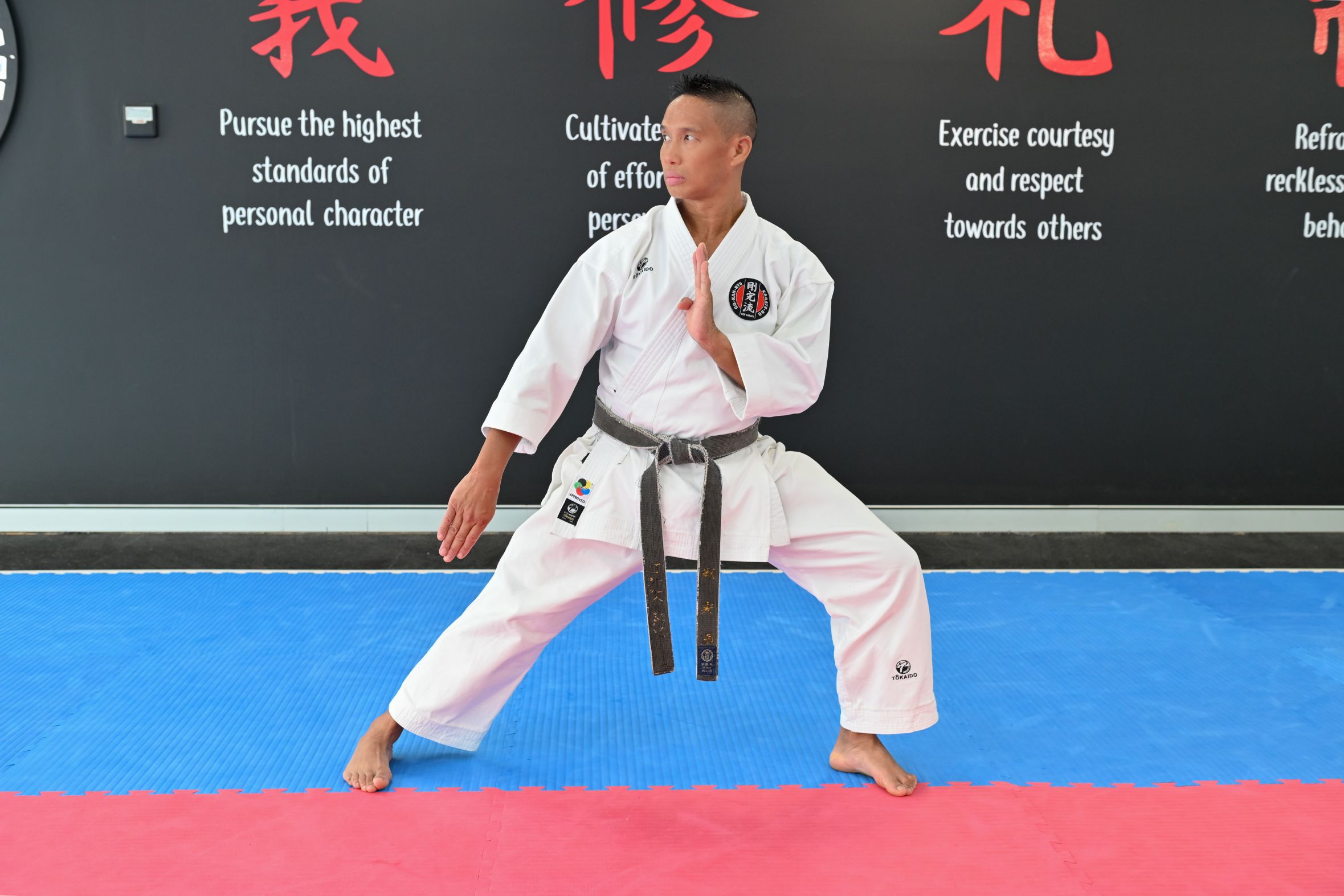

    • Counts 19 and 20 both start with an Oliva uke block (discussed earlier) and move straight into a retracting Uchi shuto uchi (inside knife-hand strike).
    • The stances are Zenkutsu dachi and the hips remain square throughout this process as the shuto strikes are whipping (similar to a side backfist) as opposed to driving strikes (like the way a shuto is performed in kihon).
    • Count 19 is the left foot forward (facing the back of the dojo) and we arrive here via a front foot (right foot) Mawate (turn) after count 18.
    • Count 20 is the right foot forward (also facing the back of the dojo) and this is achieved by the back foot stepping through.
    • After the Oliva uke block, the elbow of the top hand raises to point towards the target, and we immediately strike with the inside knife hand, carrying it out akin to a side back fist (retracting).
    • The retraction position remains high so that the elbow is still pointing towards the target. In application, the high elbow can be seen as protecting the jaw.
GKR Karate Belt Journey
GKR Karate Belt Journey – Introduction How to Tie Your Karate Belt GKR Karate Grading Criteria You May Feel Like You’re Not Improving Break Through the Boredom Barrier Does Empty Hand Mean No Weapons? Kata Is A Tree With Many Branches Beware Of The Autopilot Enjoy Your Journey
White Belt 10th Kyu
Introduction Benefits of Karate Japanese Traditions Introduction to Stances Introduction to Strikes Introduction to Blocks Introduction to Kicks The Karate Grading System White Belt Kids Frequently Asked Questions
Yellow Belt 8th Kyu
Yellow Belt 8th Kyu – Introduction An Introduction to Kumite Relationship Between Kihon and Kumite Relationship Between Kata Kumite and Self Defence Grading Requirements for 7th Kyu Orange Belt
Orange Belt 7th Kyu
Orange Belt 7th Kyu – Introduction Introduction to Advanced Stances Introduction to Kata Gaining A Deeper Understanding of Kata First and Second Kata First Kata Technical Checklists Second Kata Technical Checklists Kata Home Practice Orange Belt 7th Kyu – Kumite Tips Grading Requirements for 6th Kyu Green Belt
Green Belt 6th Kyu
Green Belt 6th Kyu – Introduction Introduction to Kata Saifa What is Expected of You Applying What You Know The Magic Is In The First Few Punches Class Wants and Needs Green Belt 6th Kyu – Kumite Tips Grading Requirements For 5th Kyu Blue Belt
Blue Belt 5th Kyu
Blue Belt 5th Kyu – Introduction Introduction to Kata Bassai Dai Bassai Dai Technical Aspects and Self Defence Blue Belt Blues Blue Belt 5th Kyu – Kumite Tips Grading Requirements for 4th Kyu Red Belt
Red Belt 4th Kyu
Red Belt 4th Kyu – Introduction Greater Understanding of Bassai Dai The Journey Continues The Purpose of Kata Practice Beware of Your Autopilot Red Belt Potholes Grading Requirements for 3rd Kyu Brown Belt
Brown Belt 3rd Kyu
Brown Belt 3rd Kyu – Introduction Introduction to Kata Seiunchin Seiunchin Home Practice Remove Self Imposed Limitations Advanced Techniques Brown Belt 3rd Kyu – Kumite Tips Grading Requirements For 2nd Kyu Brown Belt
Brown Belt 2nd Kyu
Brown Belt 2nd Kyu – Introduction Introduction to Kata Empi Empi Home Practice Maintain Progress Brown Belt 2nd Kyu – Kumite Tips Grading Requirements for 1st Kyu Brown Belt
Brown Belt 1st Kyu
Brown Belt 1st Kyu – Introduction Introduction to Kata Sanseru Introduction to Kata Sepai Get On Track For Black Belt Brown Belt 1st Kyu – Kumite Tips Grading Requirements For Shodan Ho
Black Belt Shodan Ho
A New Journey Begins Introduction to Kata Hangetsu Hangetsu: Home Practice Advanced Techniques Shodan Ho Kumite Tips Grading Requirements for Shodan 1st Dan Black Belt
Black Belt 1st Dan
Introduction to Kanku Dai Introduction to Kururunfa Focus On The Journey Not The Destination Going From Good to Great A Black Belt Is Always A Black Belt Shodan Kumite Tips Grading Requirements For Nidan 2nd Dan Black Belt
Black Belt 2nd Dan
Become A Knowledge Seeker Introduction to Shisochin Introduction to Kanku Sho Tips For Kata Progress Nidan Kumite Tips Grading Requirements For Sandan 3rd Dan Black Belt
Black Belt 3rd Dan
Introduction to Kata Seisan Introduction to Kata Sochin Sandan Kumite Tips
Black Belt 4th Dan & Above
Introduction to Kata Shokan-Te Introduction to Kata Nikan-Te Introduction to Kata Sankan-Te

Membership Enquiry

GKR Karate brings the exciting Martial Art of Karate to everyone. We are passionate about sharing our skills and knowledge, and we aim to inspire and empower people to reach their maximum potential through the consistent practice of Karate. We are a family club that is dedicated to fostering sound values and developing strong, humble, brave individuals and healthy communities.

If you’re interested in finding out more about joining GKR Karate, submit your details below and we will be in touch!

First Name
Last Name
Email
Phone
City
State/City/County
Country
Message
Please verify you are a human being.
GKR Karate
© GKR Karate 2026 • Website by The Digital Embassy
  • About GKR Karate
  • •
  • Articles
  • •
  • Club Partners
  • •
  • Contact Us
  • •
  • Privacy Policy
  • •
  • Terms and Conditions
  • •
  • Cookie Settings
GKR Karate
  • About GKR Karate
  • Articles
  • Club Partners
  • Contact Us
  • Privacy Policy
  • Terms and Conditions
  • Cookie Settings
© GKR Karate 2026 • Website by The Digital Embassy
This website may capture information to improve user experience. By using our website you consent to this in accordance with our Privacy Statement. Privacy Policy
Read More

Select Your Country

AU

NZ

UK

This website uses cookies to improve your experience. Privacy Policy

Decline Cookie Settings
Accept All
Powered by WPLP Compliance Platform
Cookies are small text files that can be used by websites to make a user's experience more efficient. The law states that we can store cookies on your device if they are strictly necessary for the operation of this site. For all other types of cookies we need your permission. This site uses different types of cookies. Some cookies are placed by third party services that appear on our pages.
  • Necessary
    Always Active
    Necessary cookies help make a website usable by enabling basic functions like page navigation and access to secure areas of the website. The website cannot function properly without these cookies.

  • Marketing
    Marketing cookies are used to track visitors across websites. The intention is to display ads that are relevant and engaging for the individual user and thereby more valuable for publishers and third party advertisers.

  • Analytics
    Analytics cookies help website owners to understand how visitors interact with websites by collecting and reporting information anonymously.

  • Preferences
    Preference cookies enable a website to remember information that changes the way the website behaves or looks, like your preferred language or the region that you are in.

  • Unclassified
    Unclassified cookies are cookies that we are in the process of classifying, together with the providers of individual cookies.

Powered by WPLP Compliance Platform
Cookie Settings