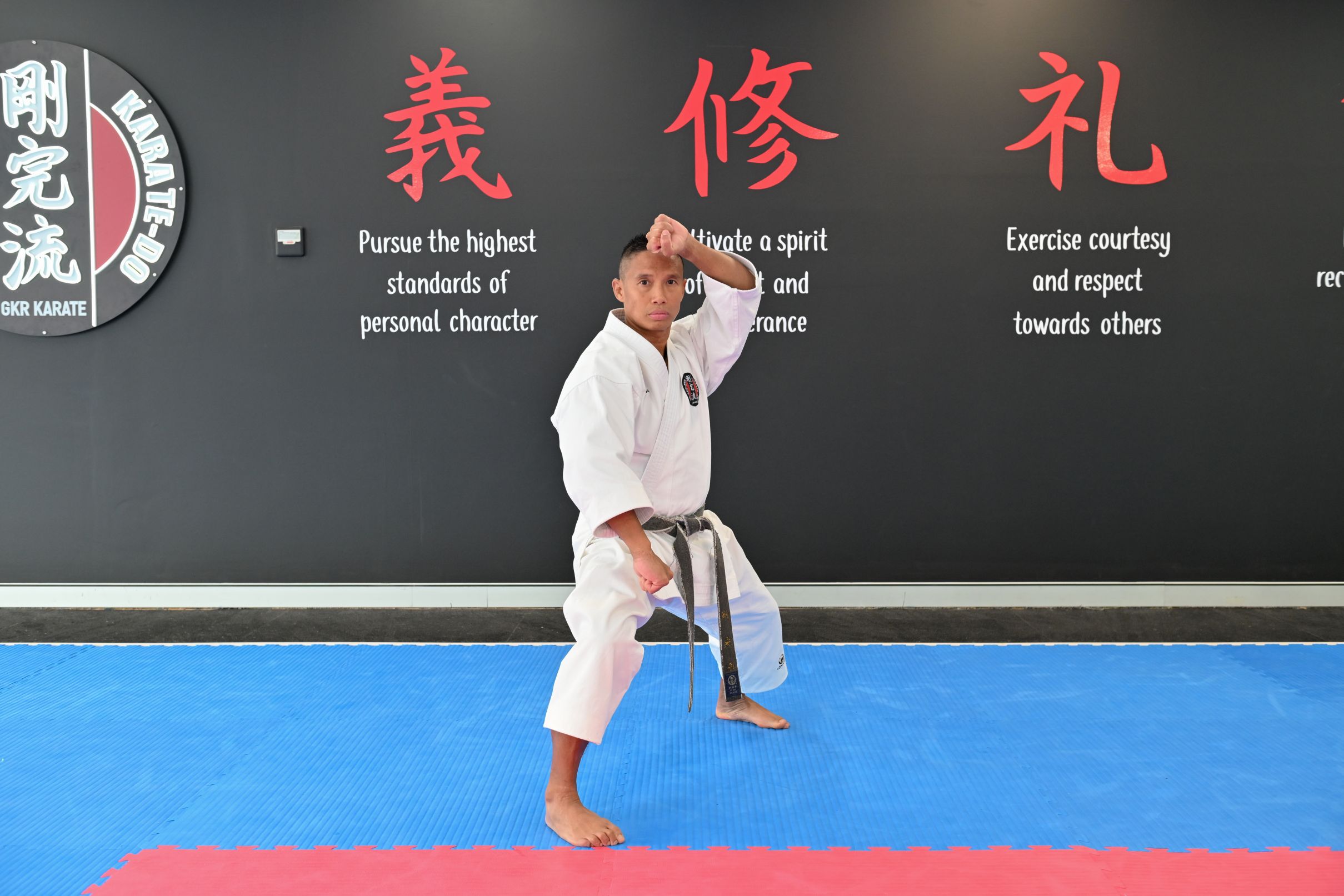
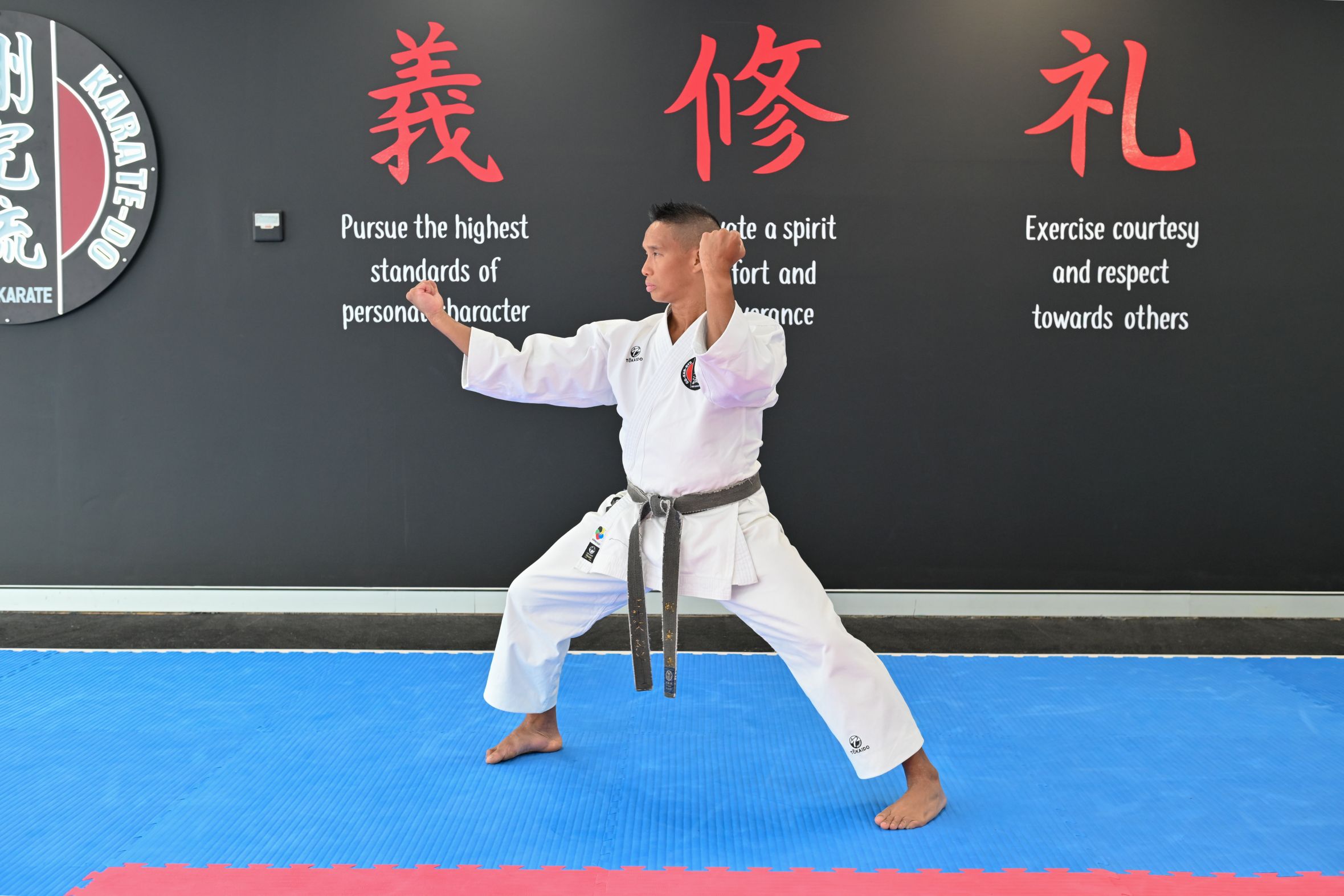
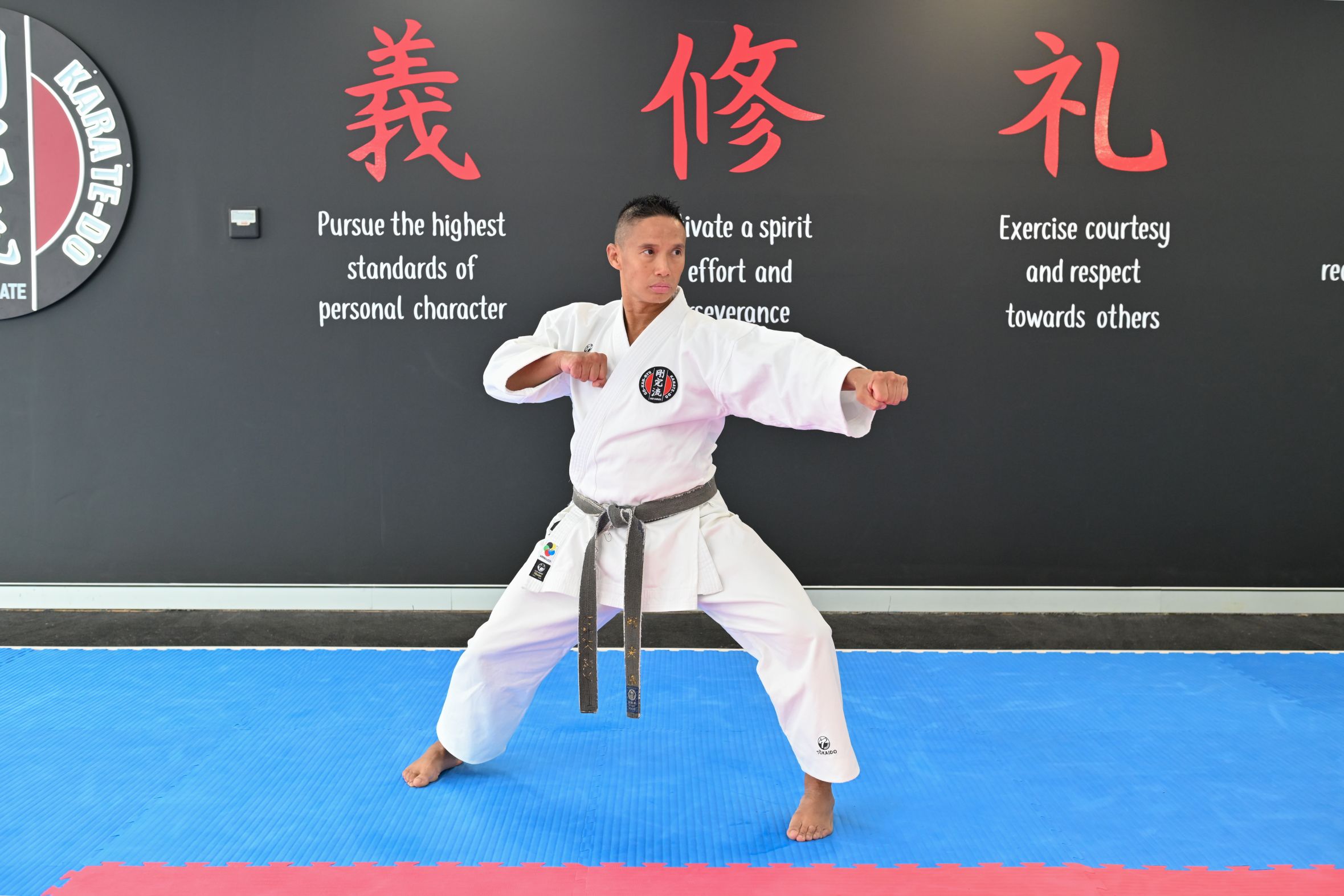
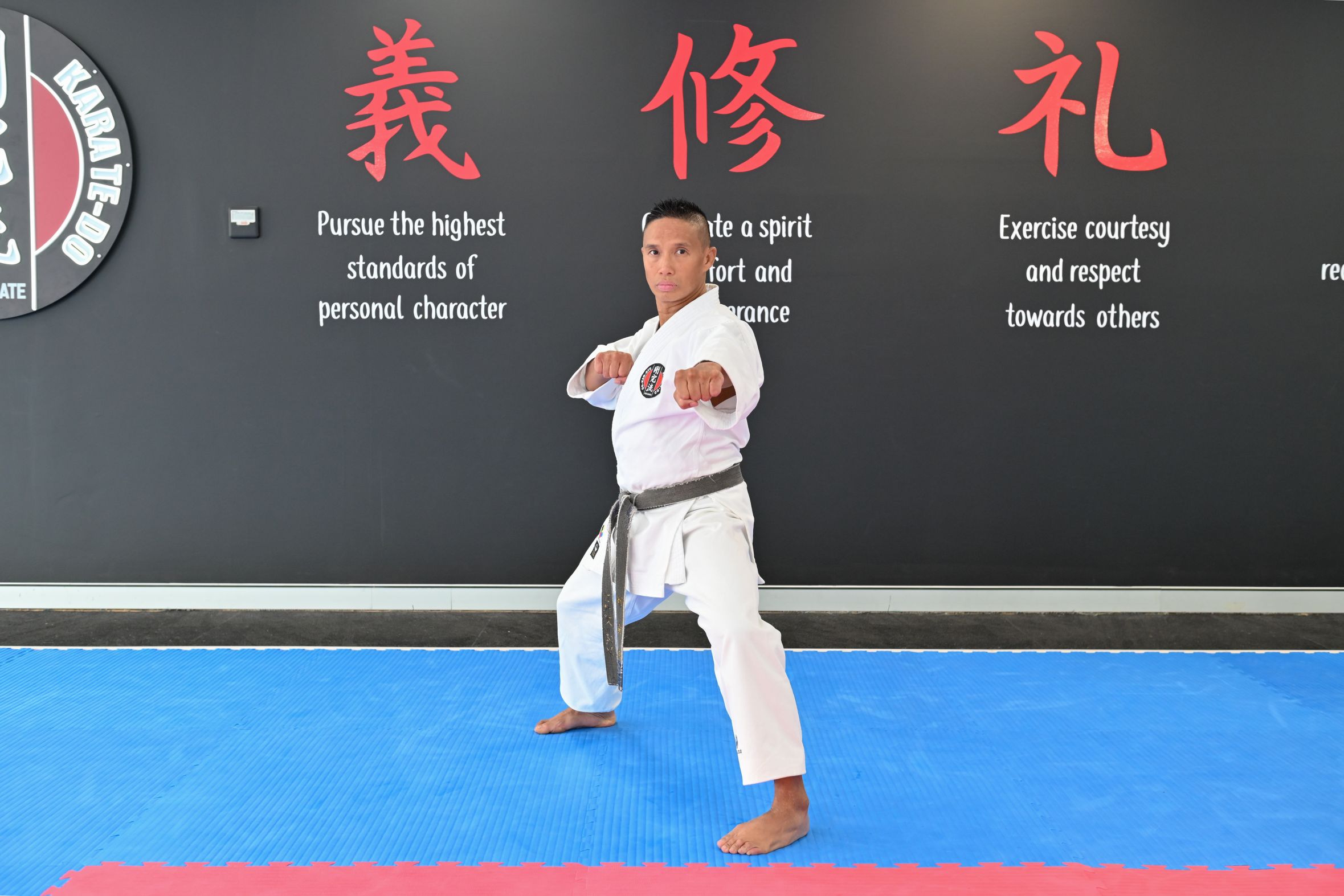
Sochin is introduced to GKR students at Sandan (3rd dan), along with kata Seisan. The rhythm of this kata is slow deliberate movements, interspersed with dynamic outbursts of speed. Sochin is unique as it is the only Go-Kan-Ryu kata that utilizes the long fudo-datchi (rooted or immovable stance) in place of a zenkutsu-datchi (long forward stance).
While GKR’s two Sandan kata (Seisan and Sochin) both hail from Naha in Okinawa and were once quite similar, the way they are practised today sees them vastly different in style and technique. Sochin is a typical Shuri-te, Tomari-te (or later Shotokan) style kata with long, deep stances (primarily using fudo-datchi – immovable stance).
Sochin promotes constant forward movement irrespective of whether one is striking, blocking, wrestling, locking up etc. This is illustrated very clearly in the opening sequence of Sochin, where, like Seisan, it practices consistent forward movements with slow deliberate techniques while keeping the core muscles tense.
GKR Karate – Sochin
Tips for Sochin
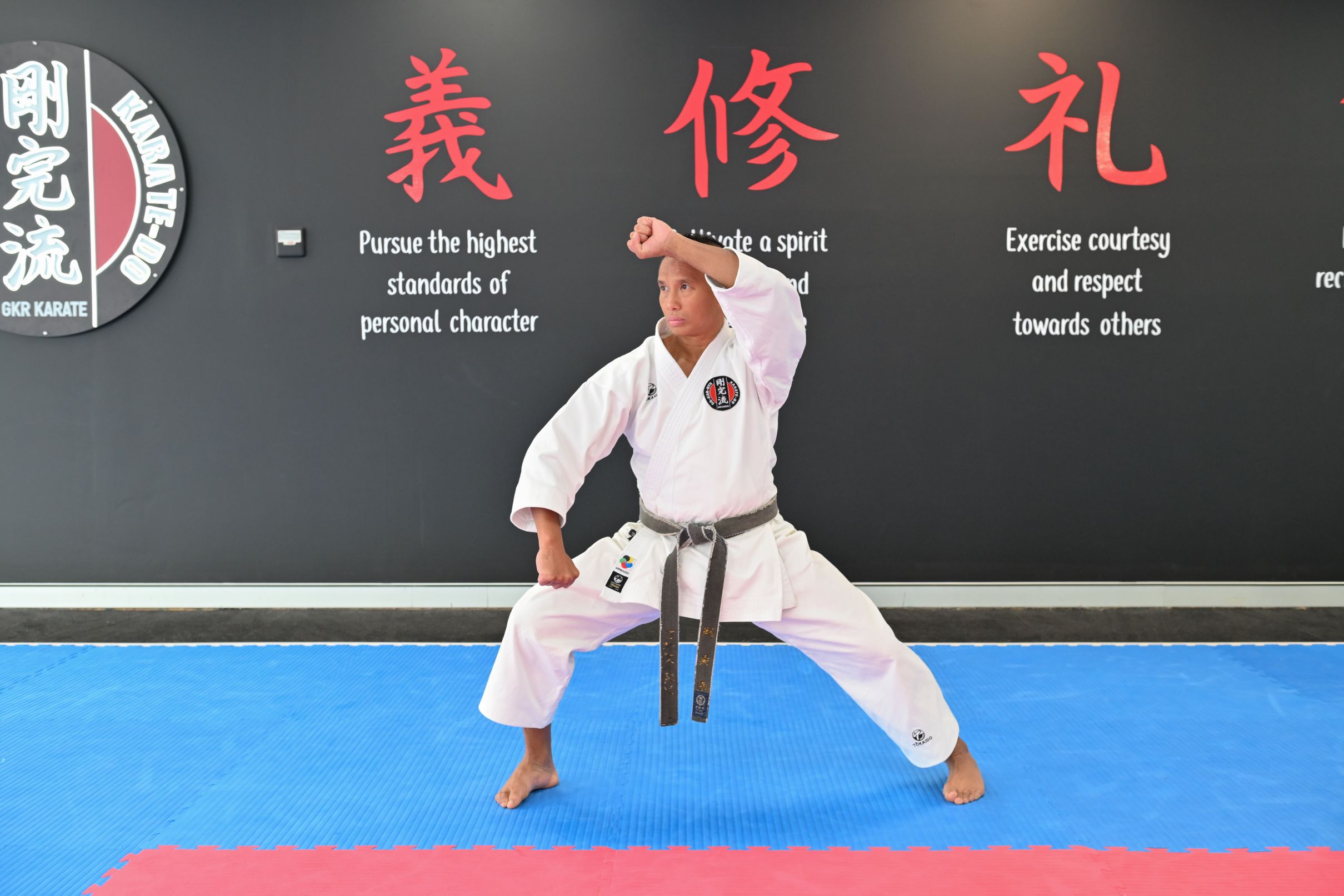
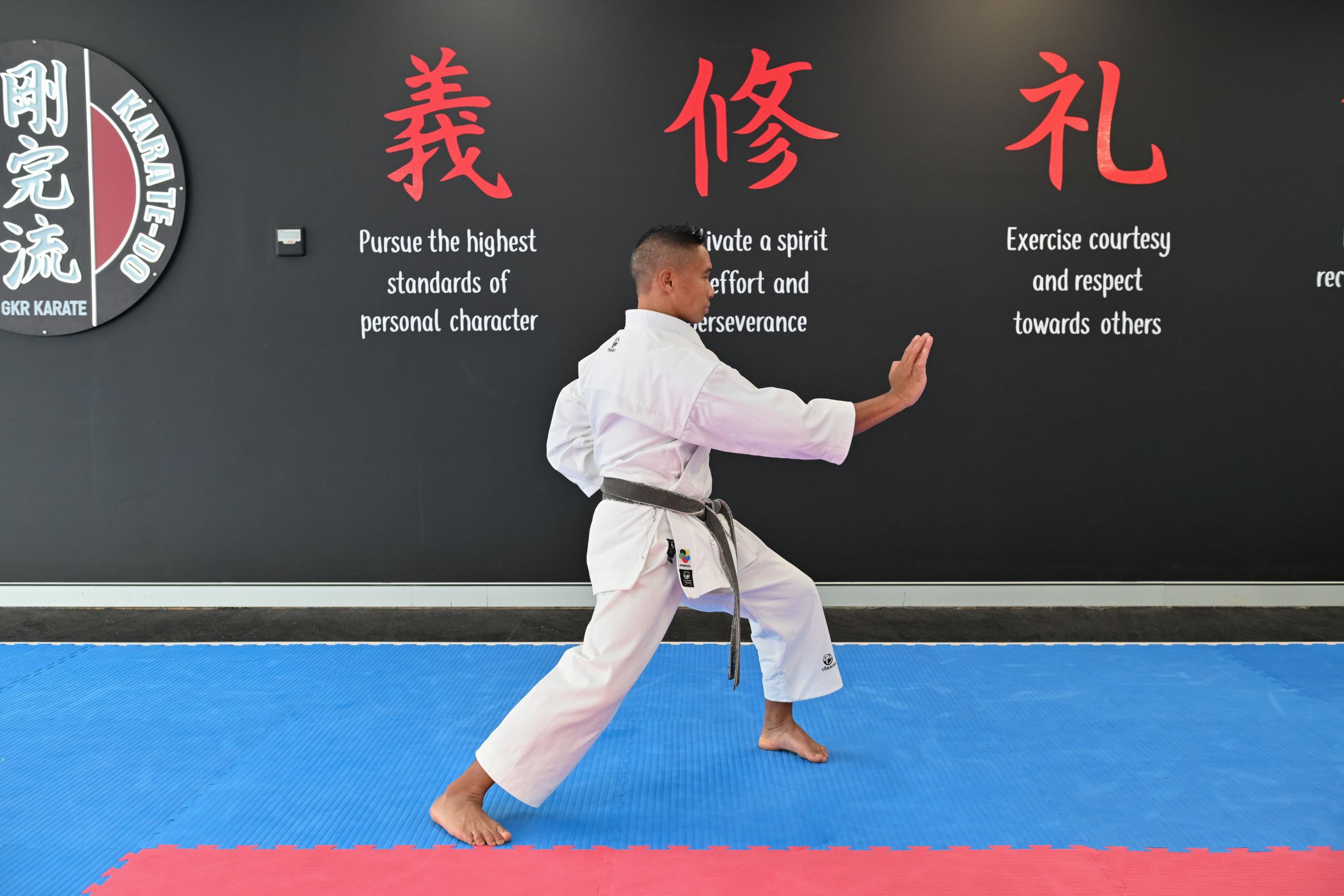
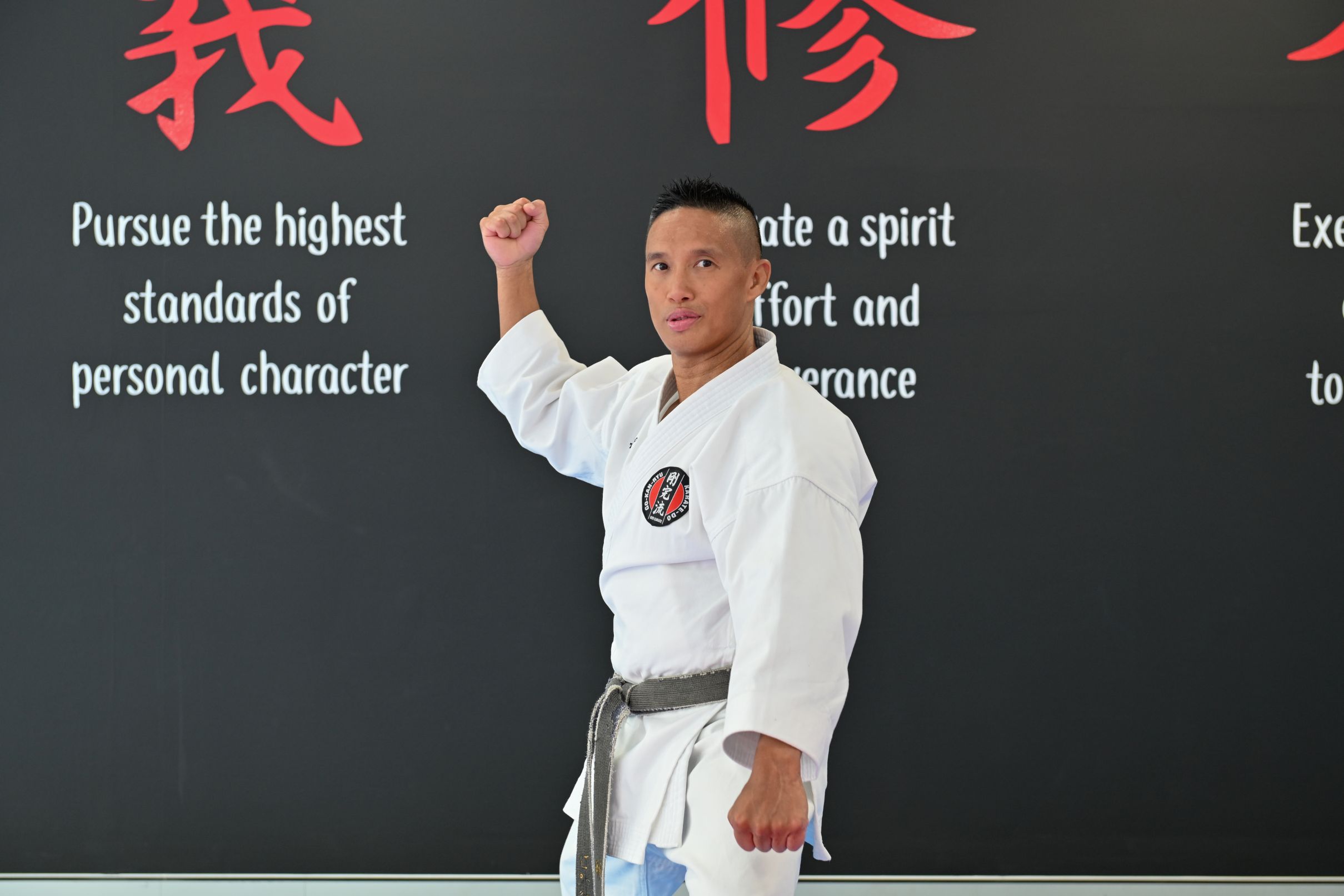
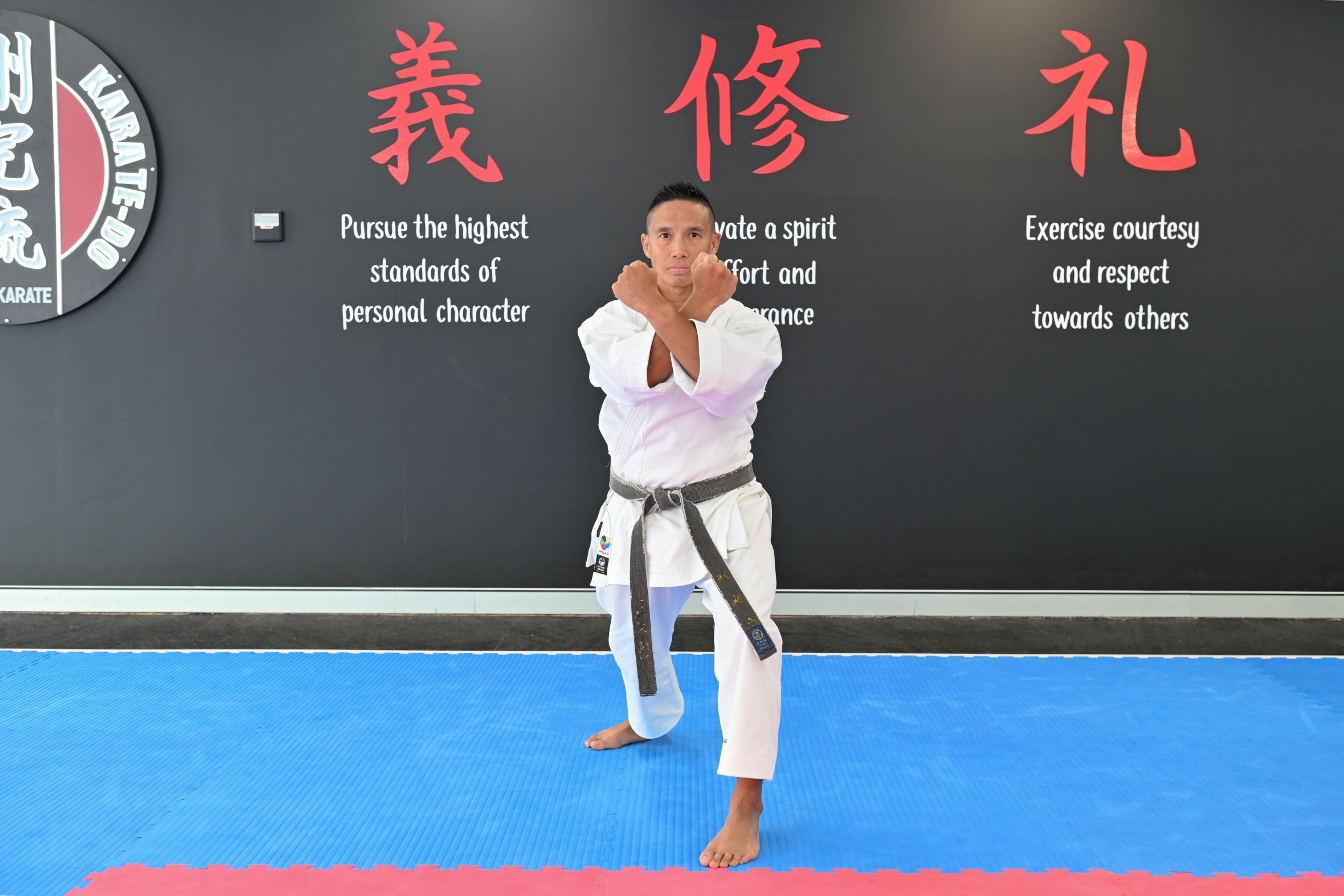
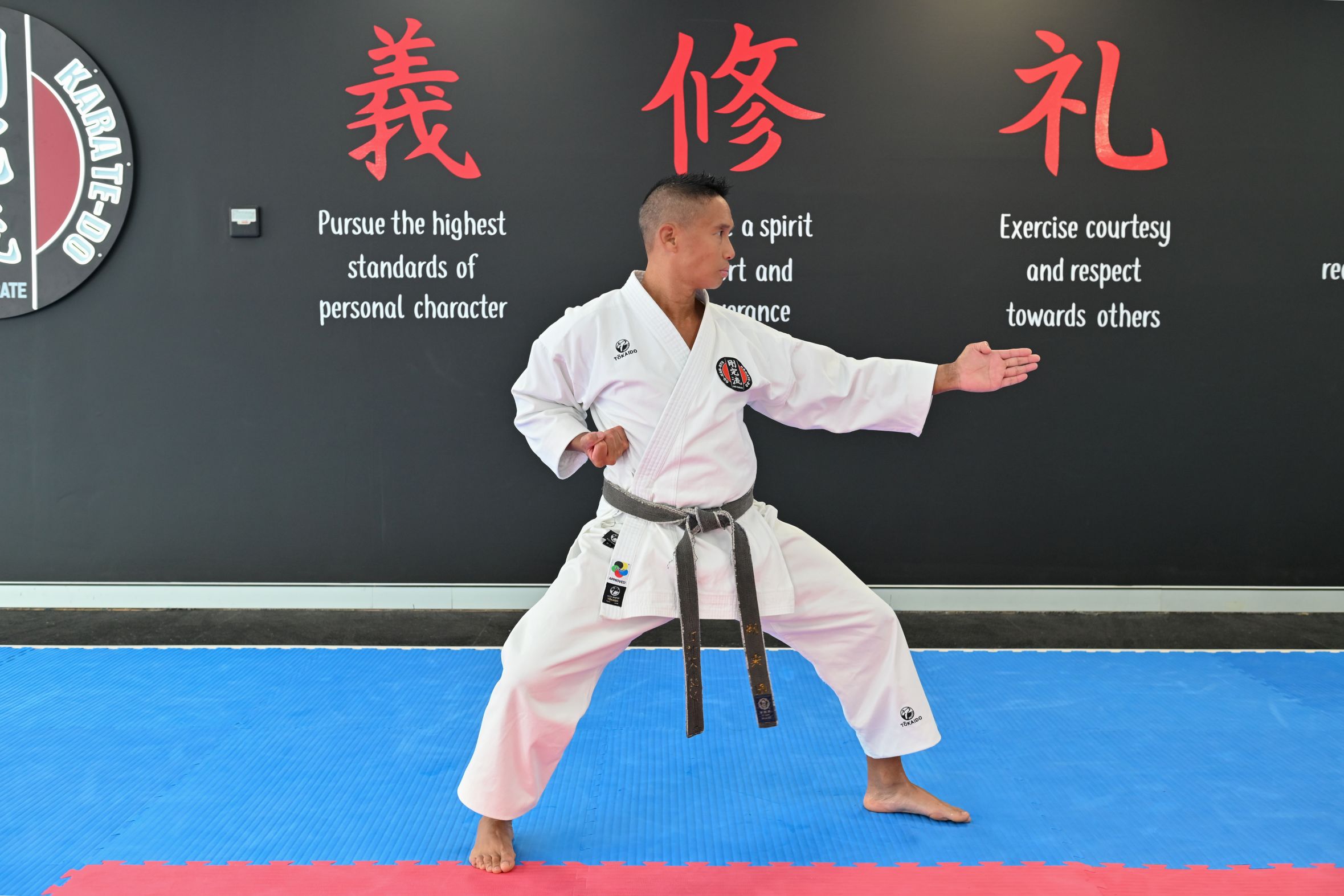
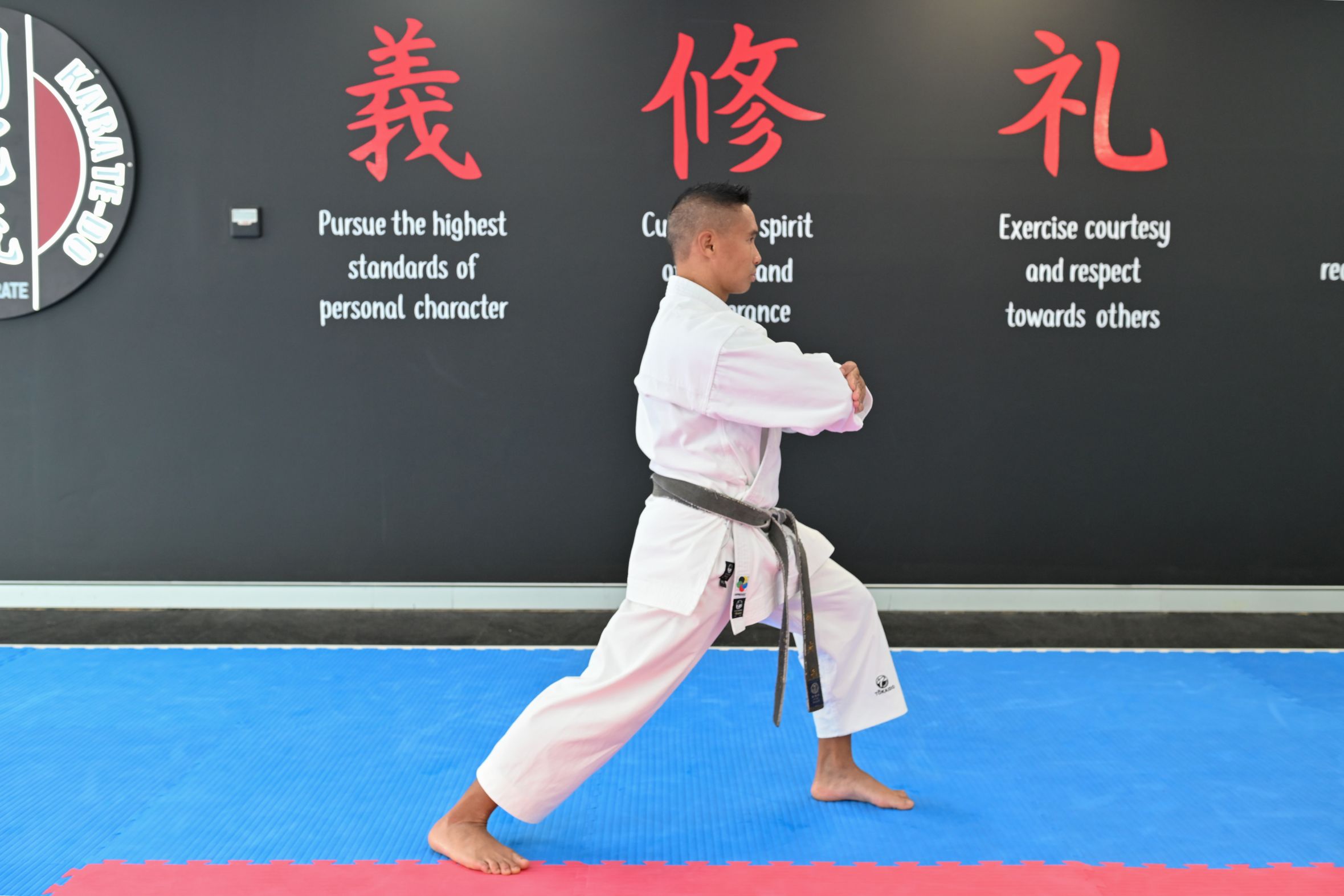
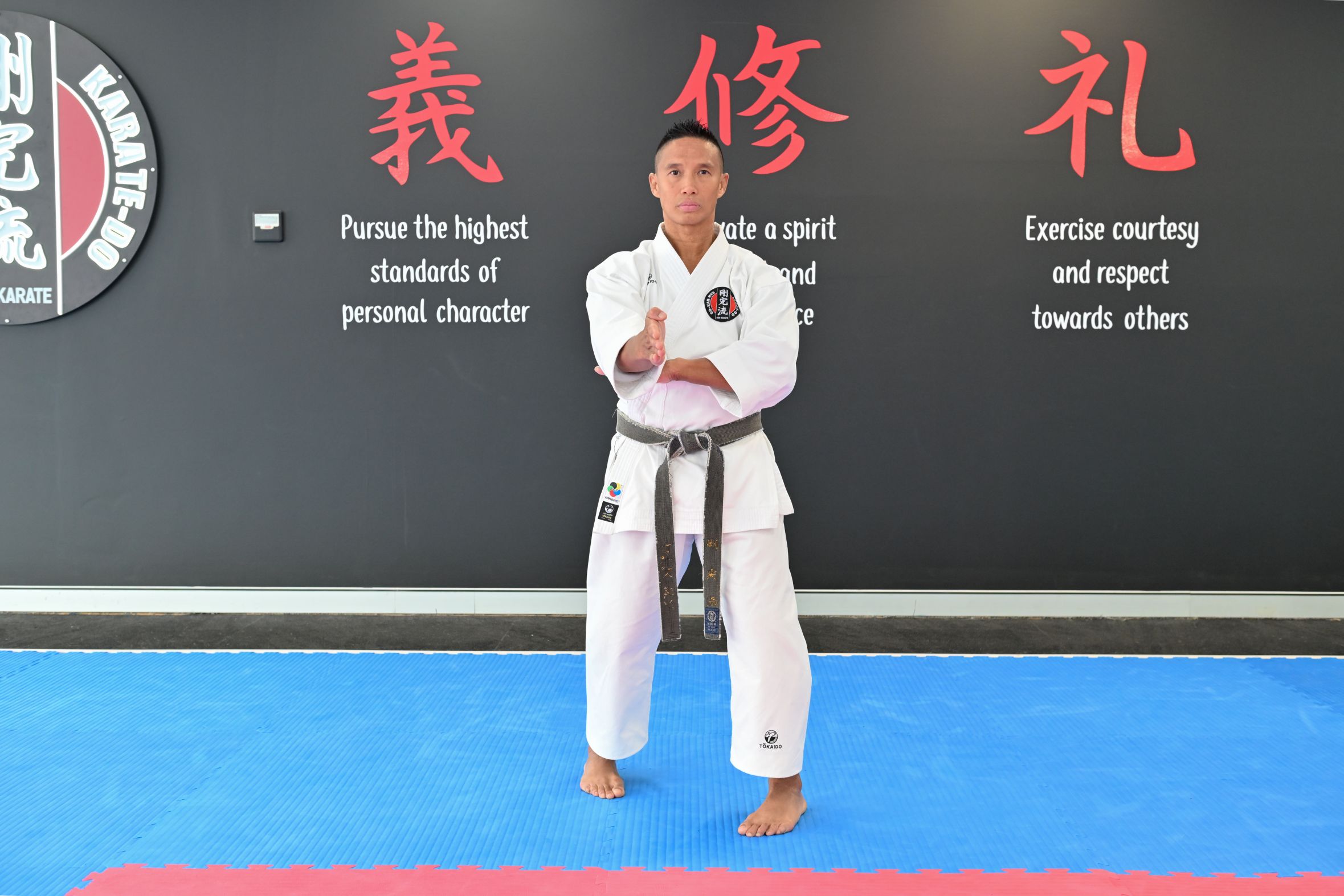
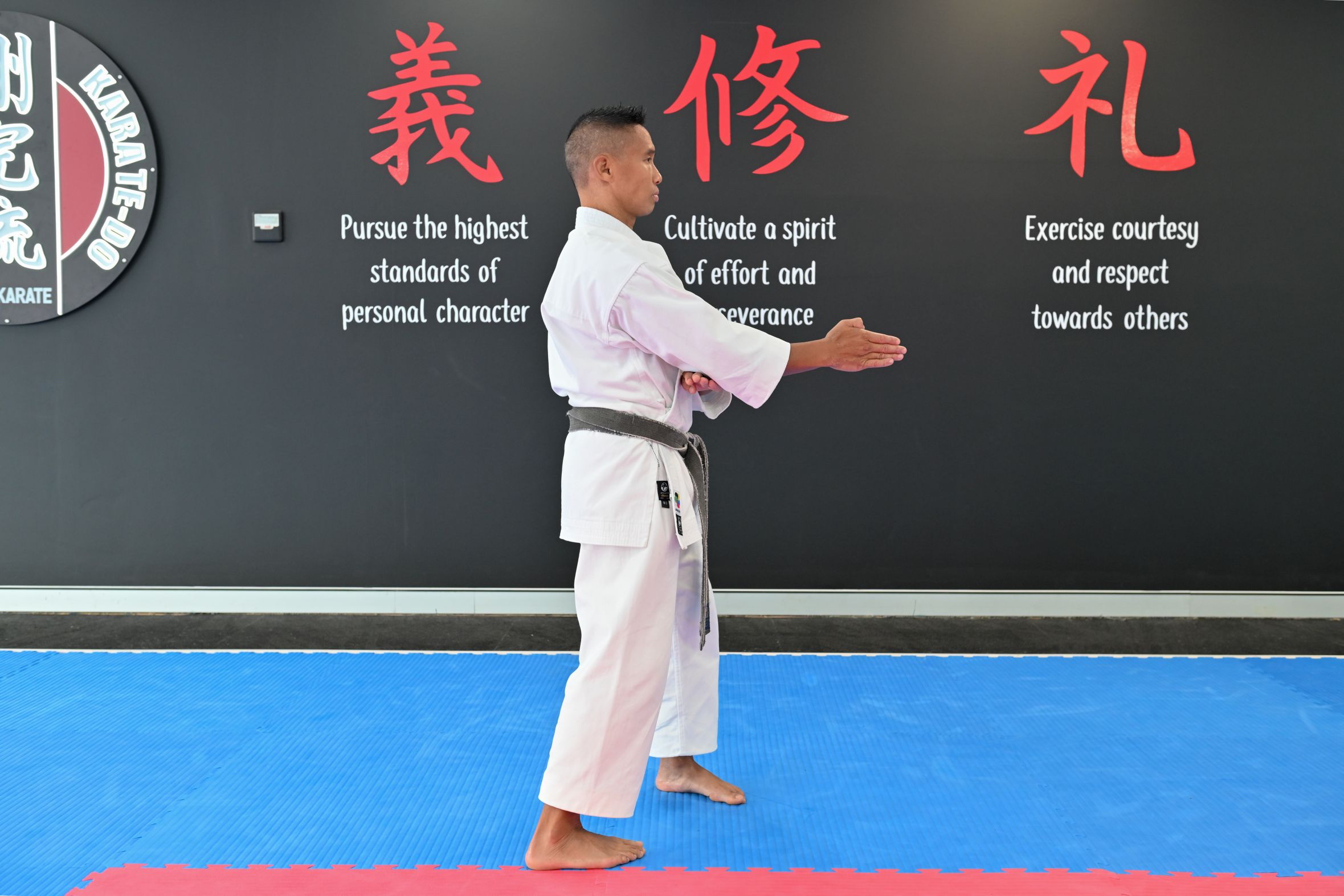
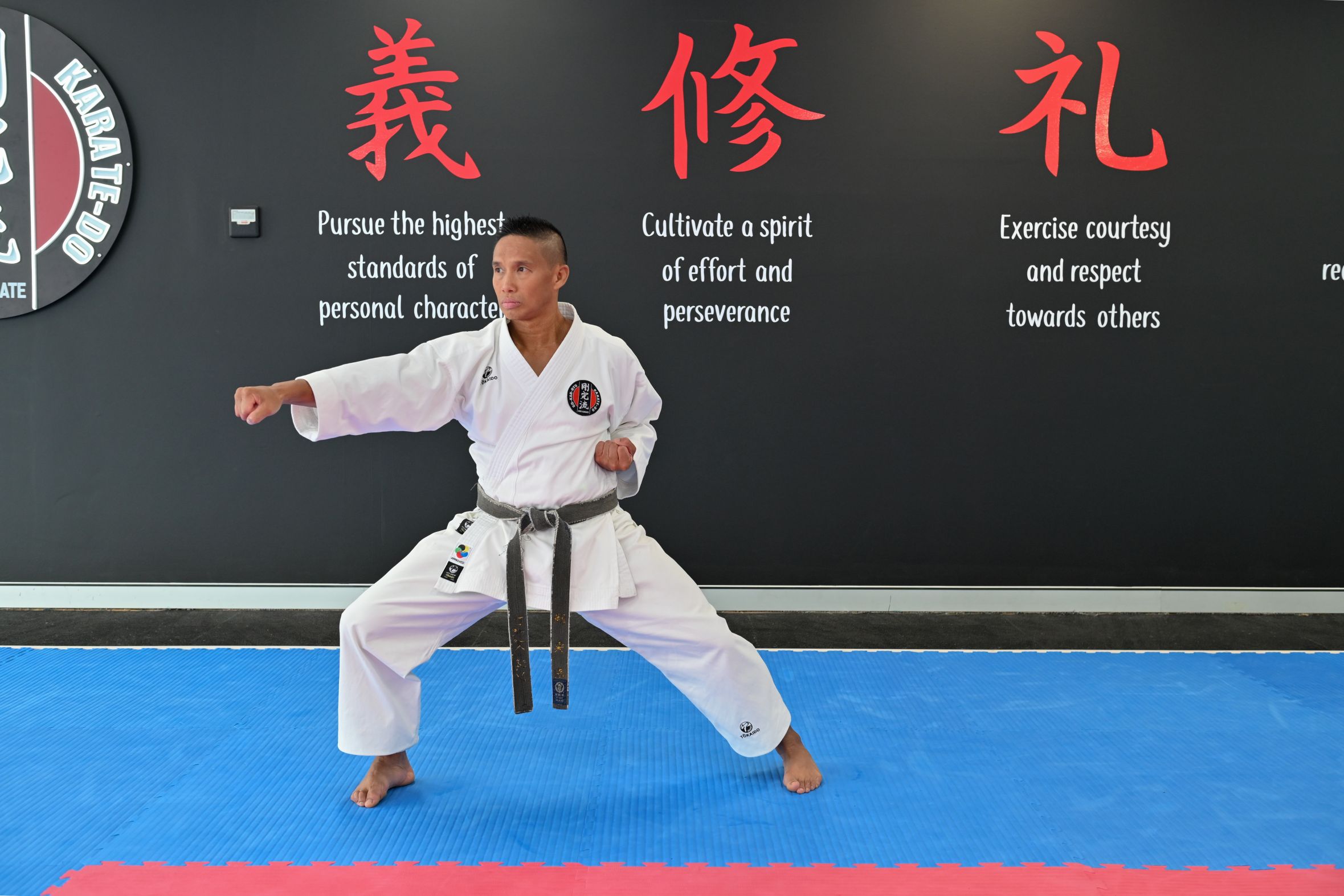
- Kata Tip: Fudo Dachi (Immovable Stance)
- Count 1: Stepping from Heiko Dachi (Parallel Stance) to Fudo Dachi (Immovable Stance)
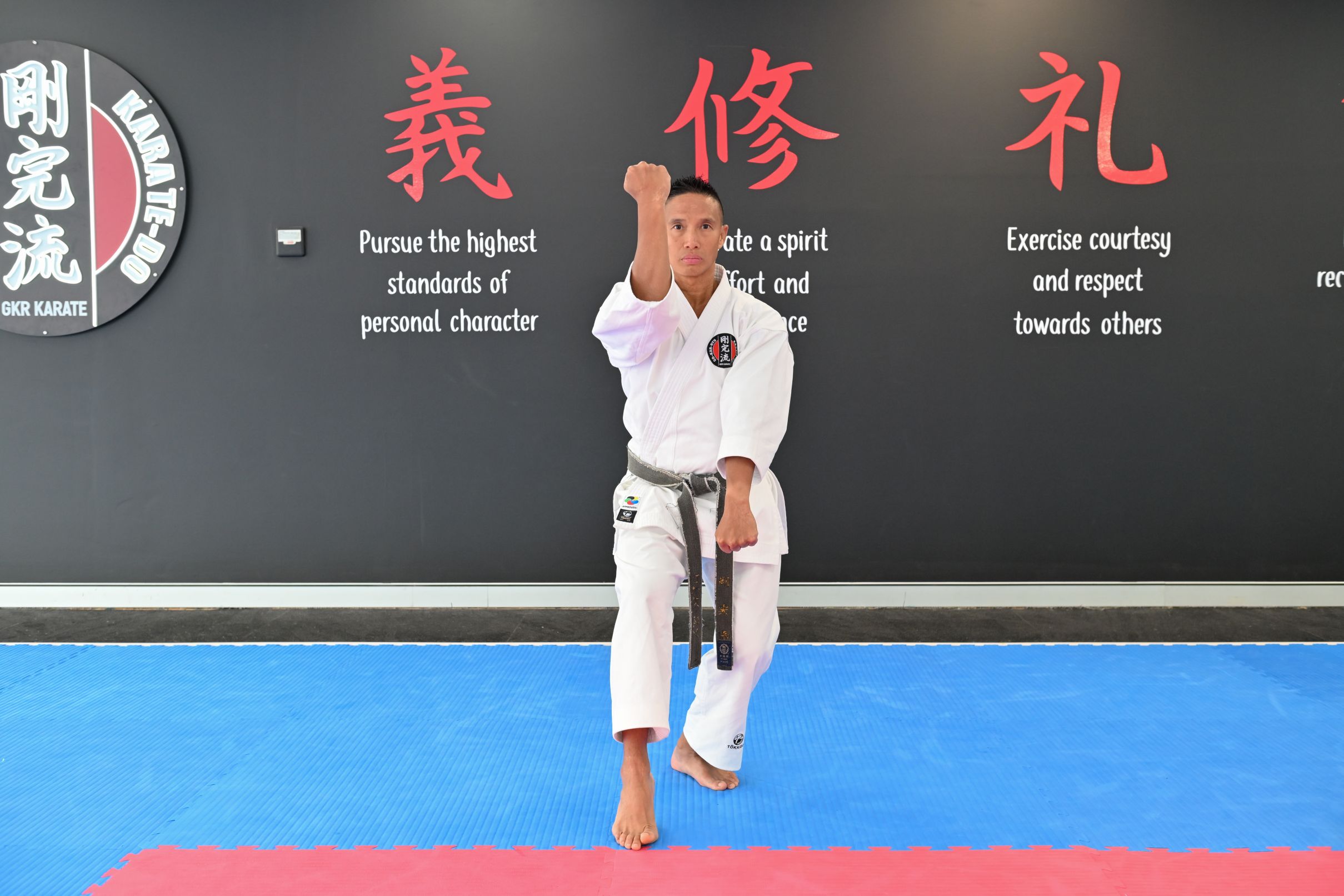
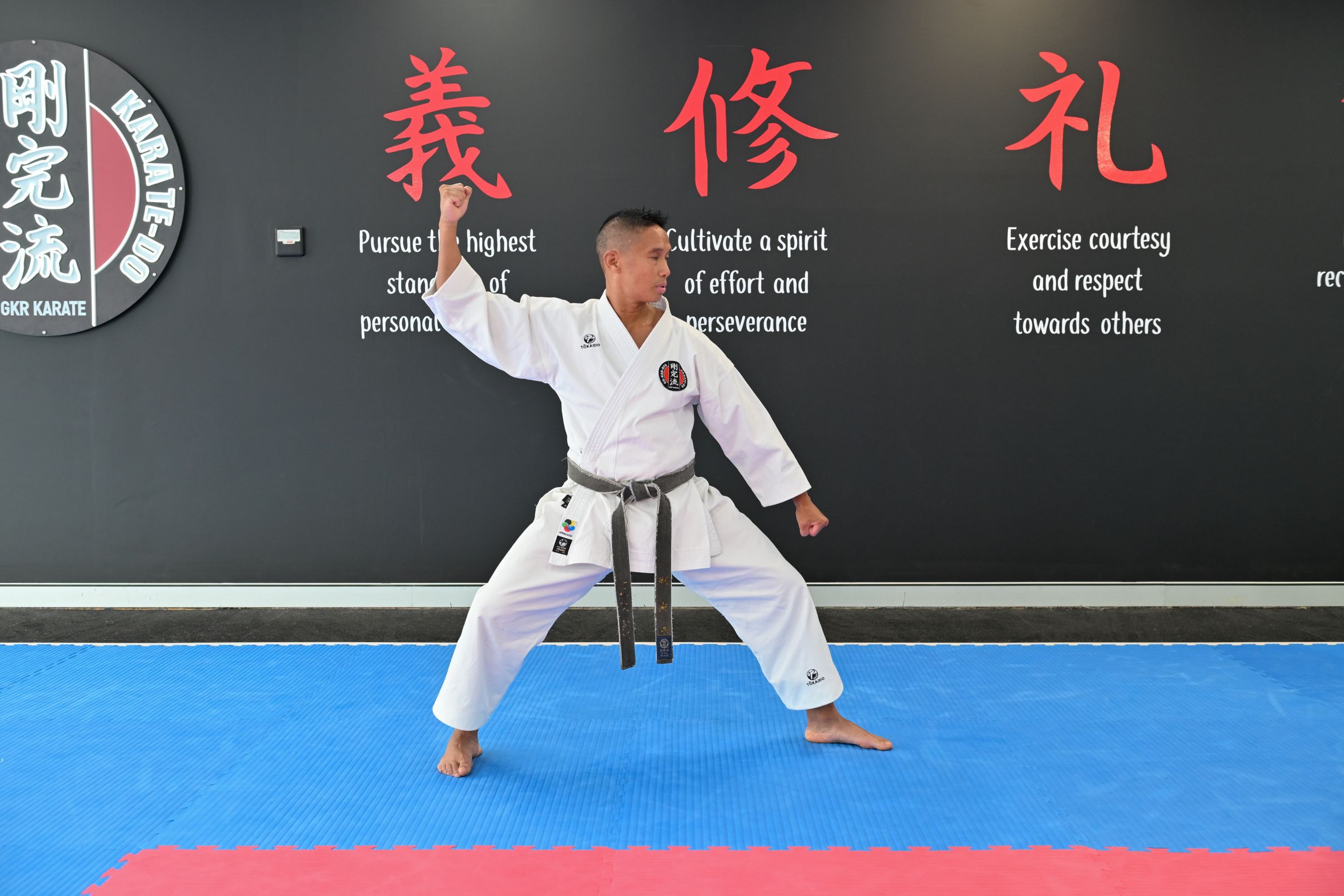
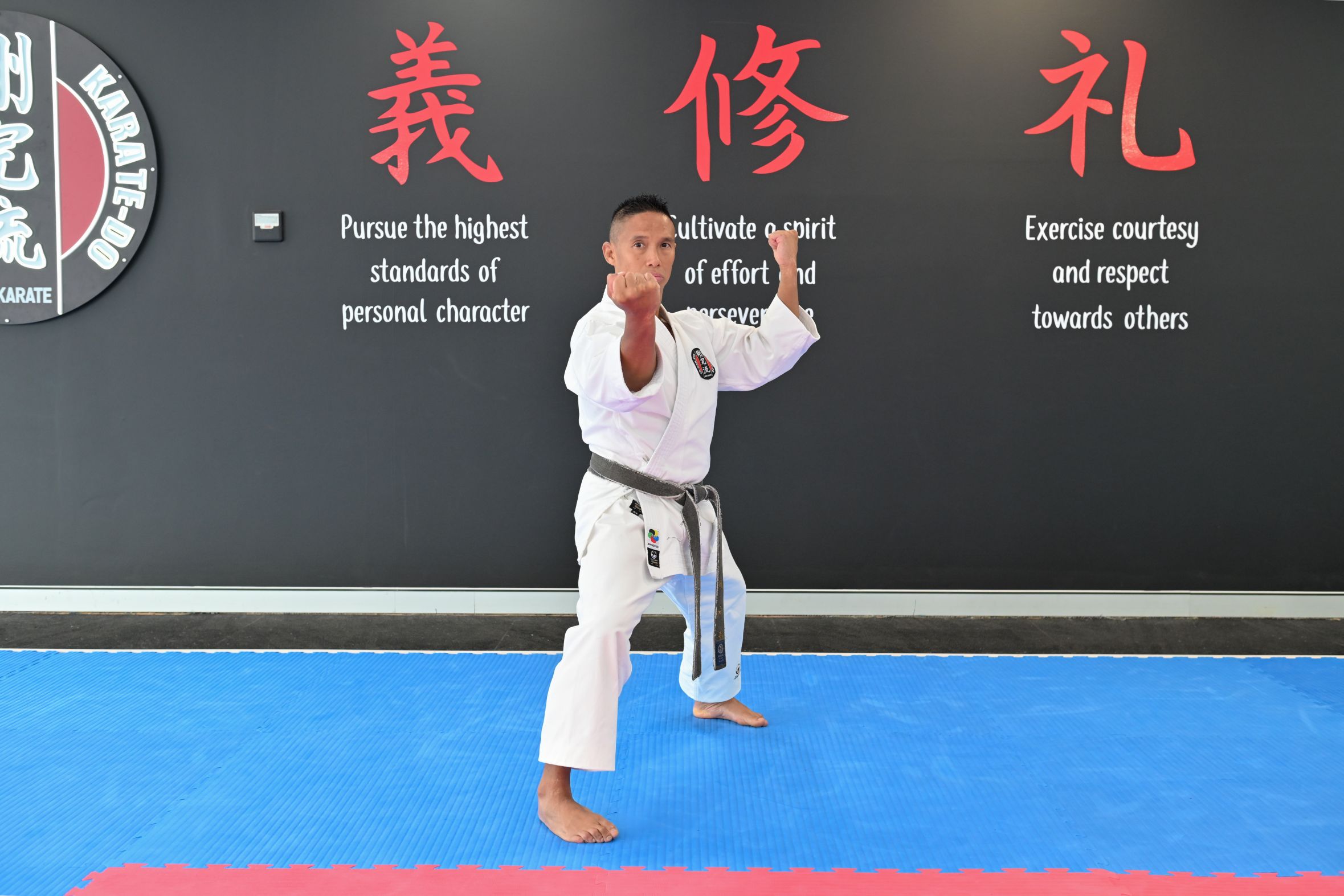
- Counts 1, 5, 9 and 22: Jo-ge (Head-Groin) Sen-no-sen (Simultaneous Block and Strike) in Fudo Dachi (Immovable Stance)
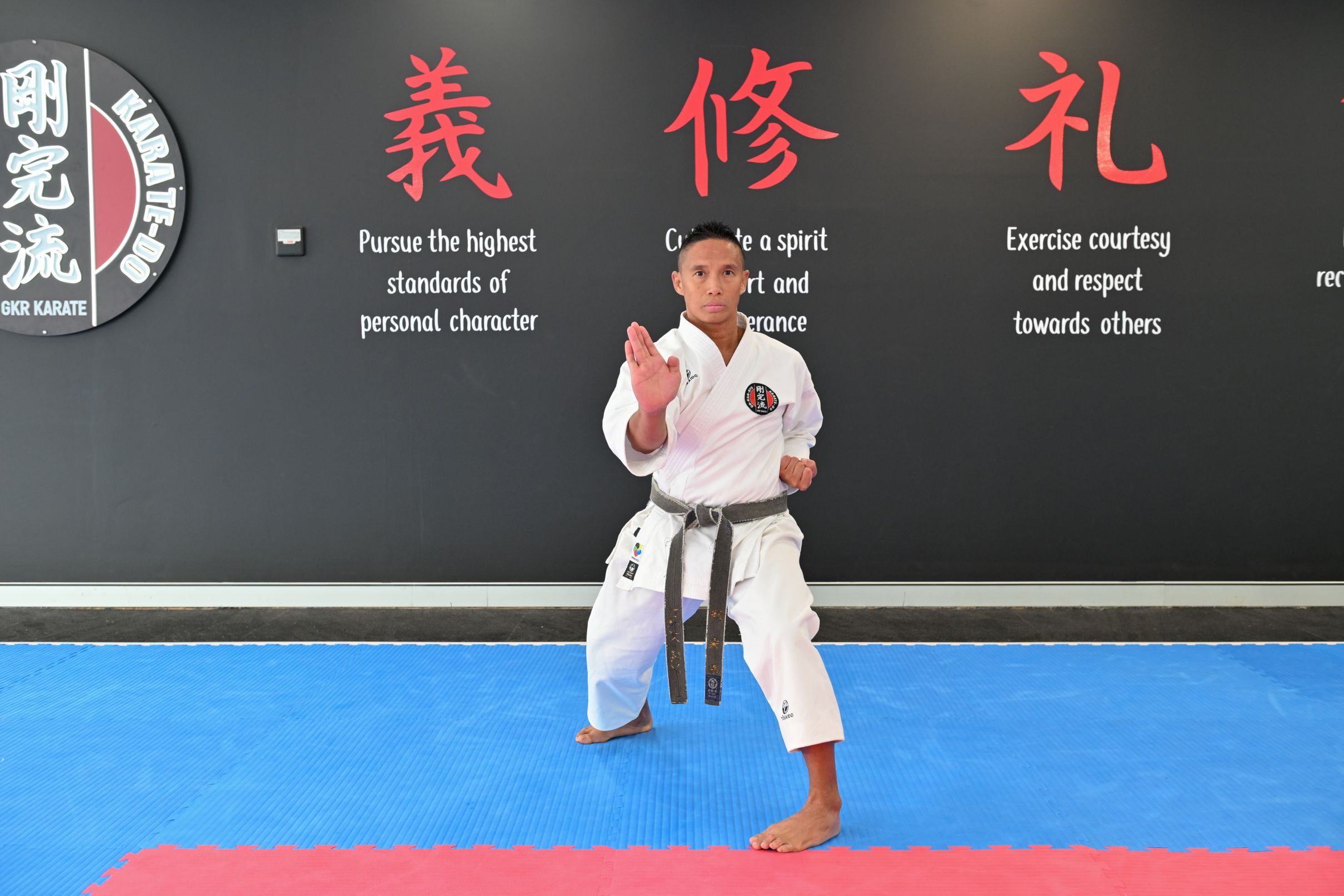
- Counts 2, 6 and 10: Preparation Before Taisho Uke (Palm-Heel Block)
- Counts 2, 6 and 10: Execution of Taisho Uke (Palm-Heel Block)
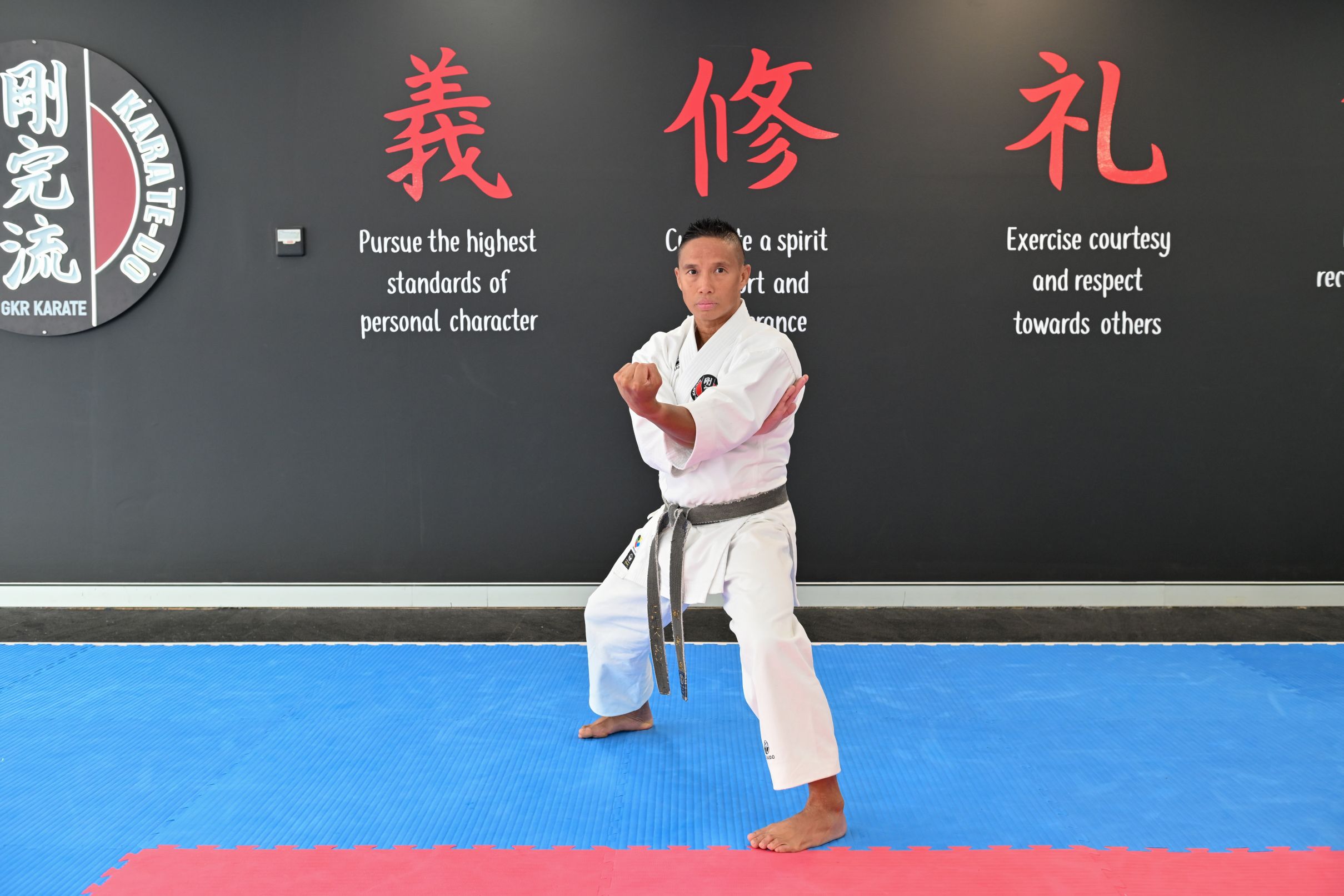
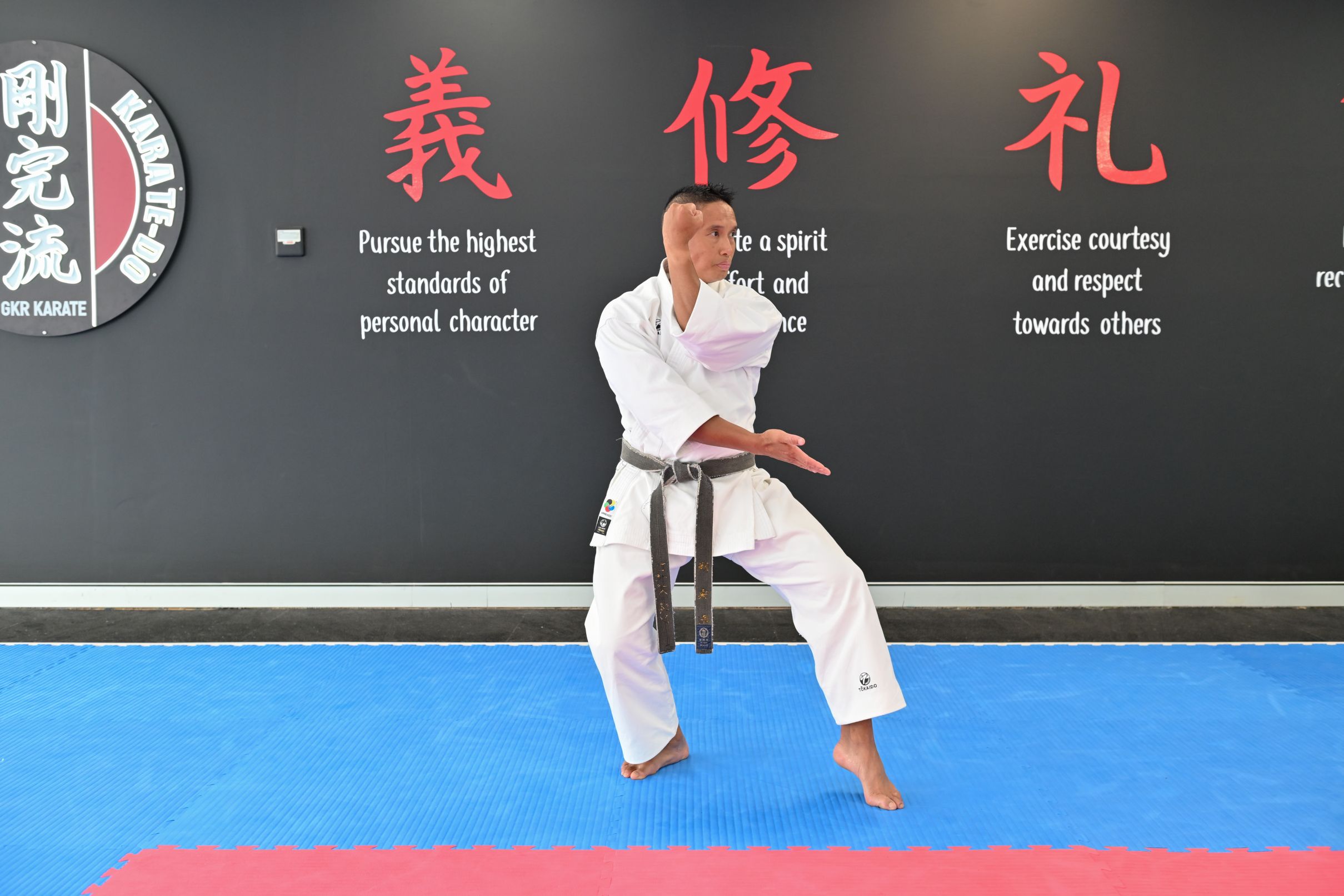
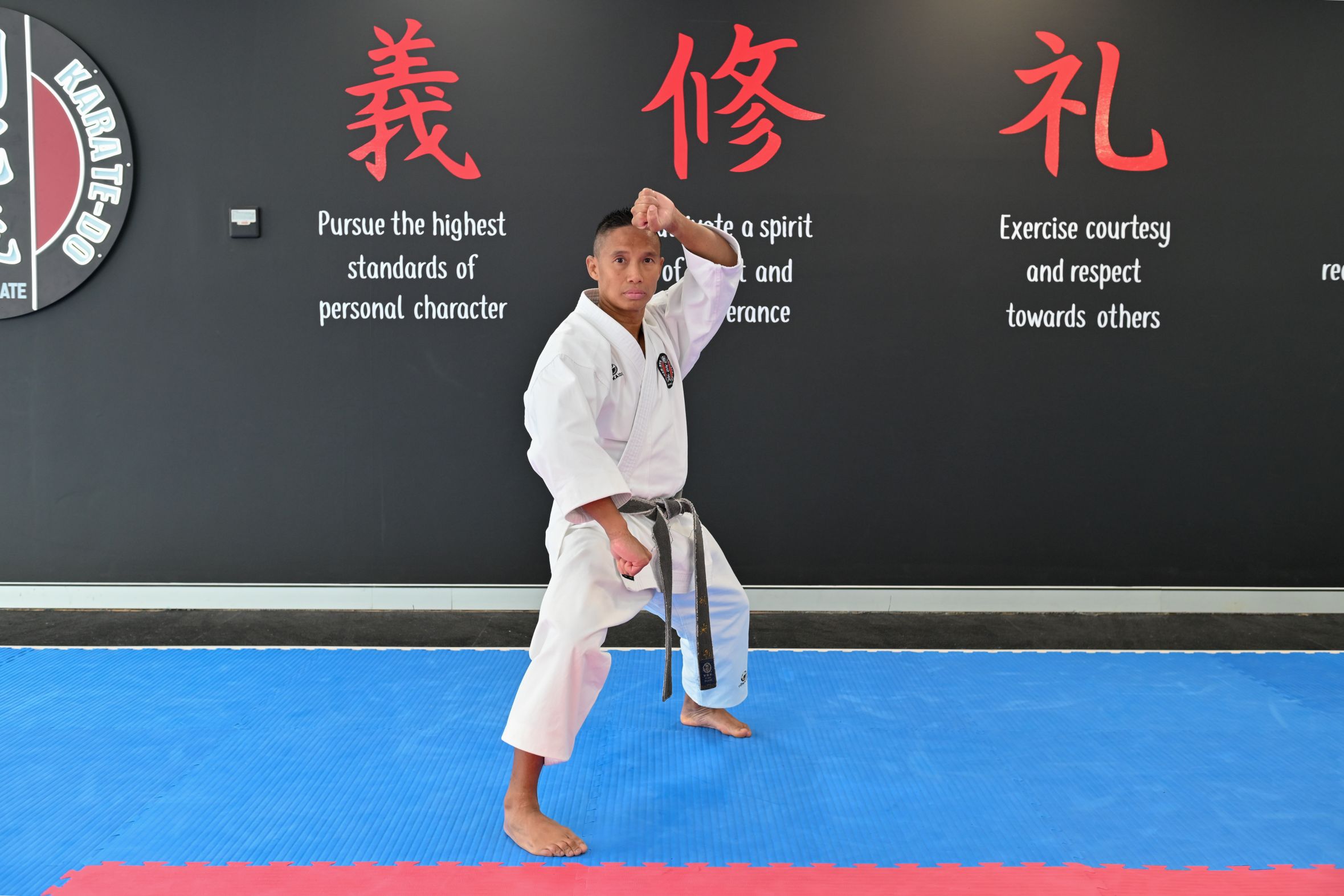
- Counts 4 and 8: Preparation for Manji Uke (Vortex Block)
- Counts 4 and 8: Execution for Manji Uke (Vortex Block)
- Counts 5 and 9: Preparation for Jo-ge (Head-Groin) Sen-no-sen (Simultaneous Block and Strike)
- Counts 11 and 12: Mawashi Emp
- Count 20: Yon-Hon Nukite (4 Finger Spear-Hand Strike)
- Count 21: Sen-no-sen (Simultaneous Block-Counter) with Jodan Tetsui (Head-Level Hammer-Fist) and Jodan Uchi Uke (Head-Level Inside Hooking Block).
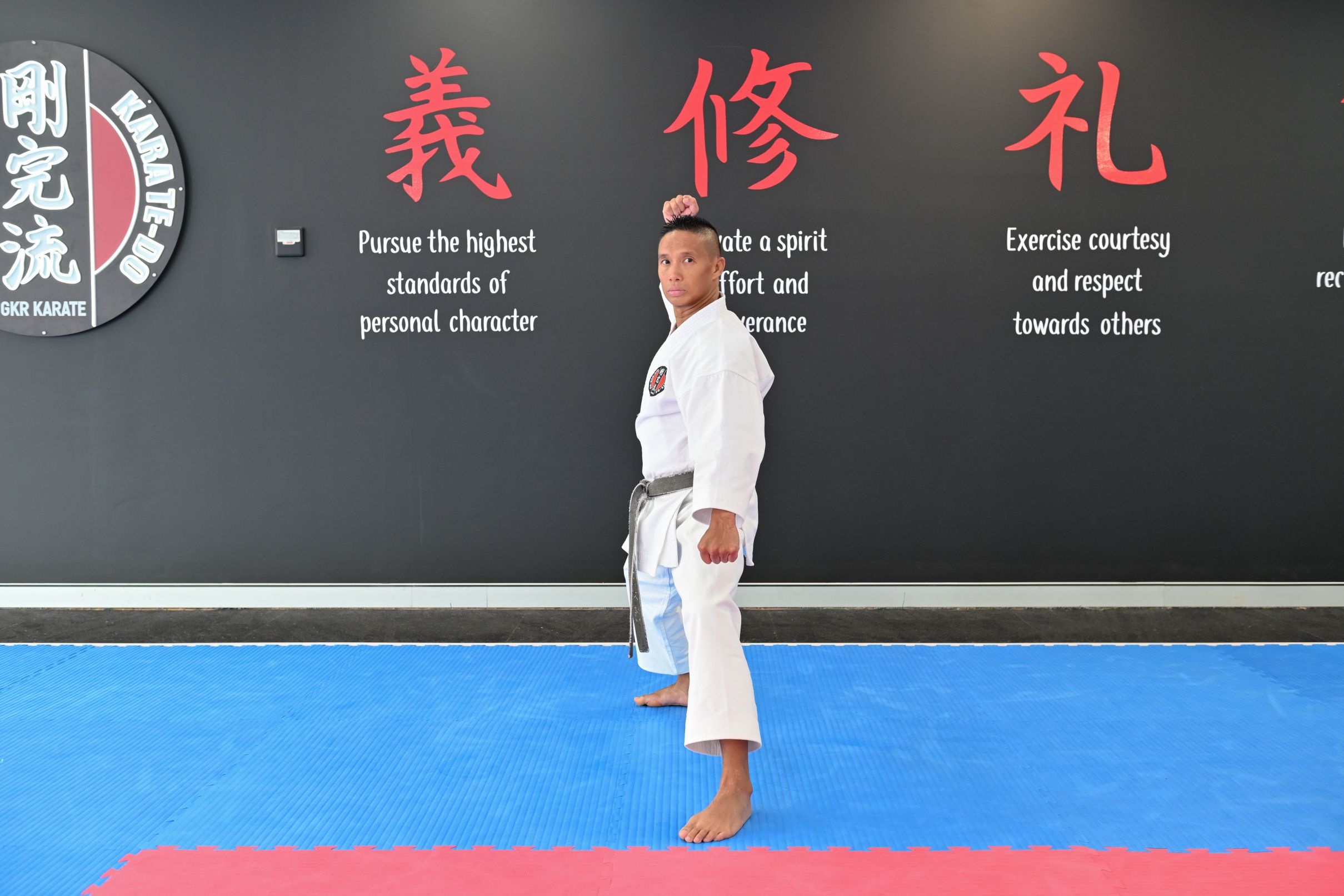
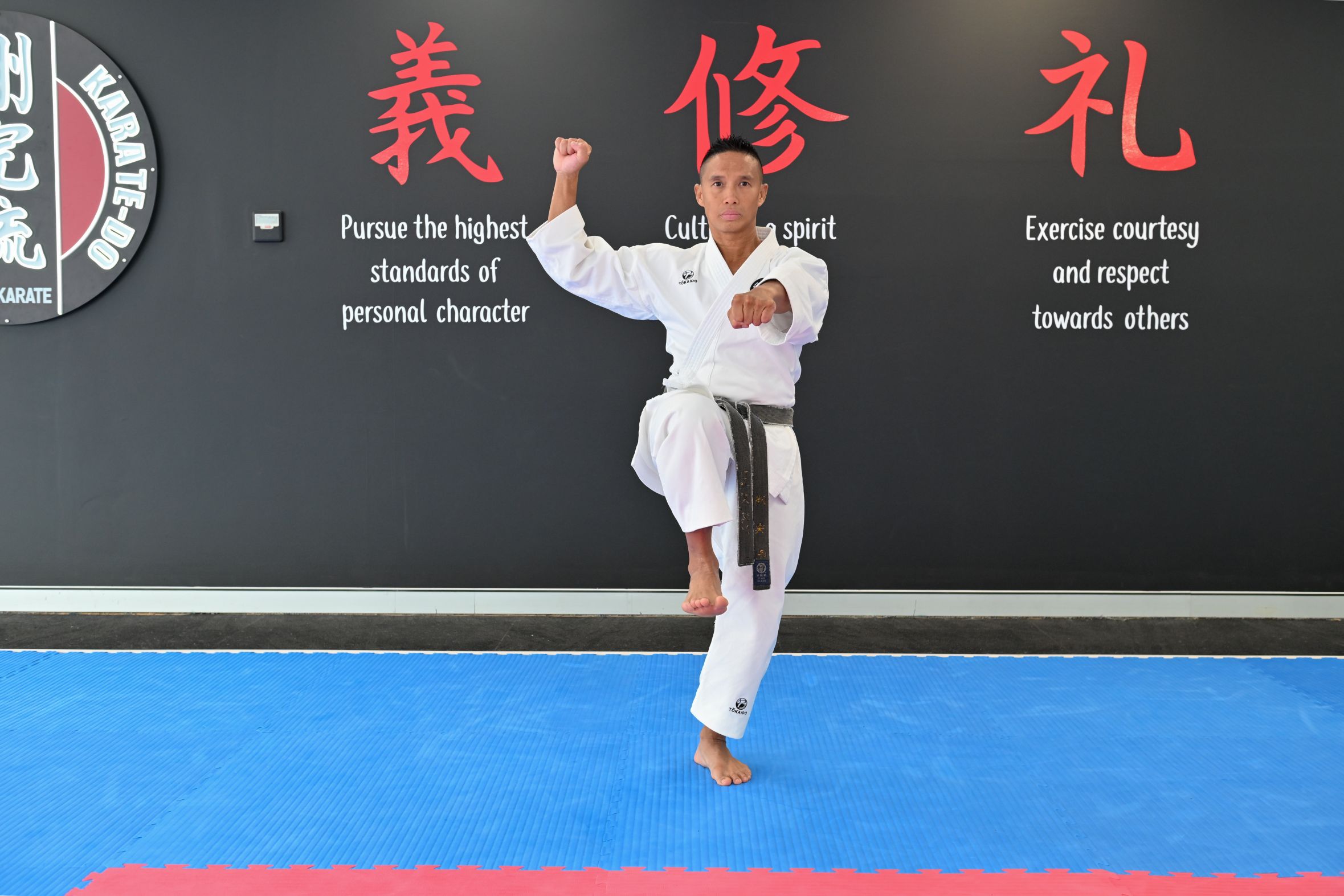
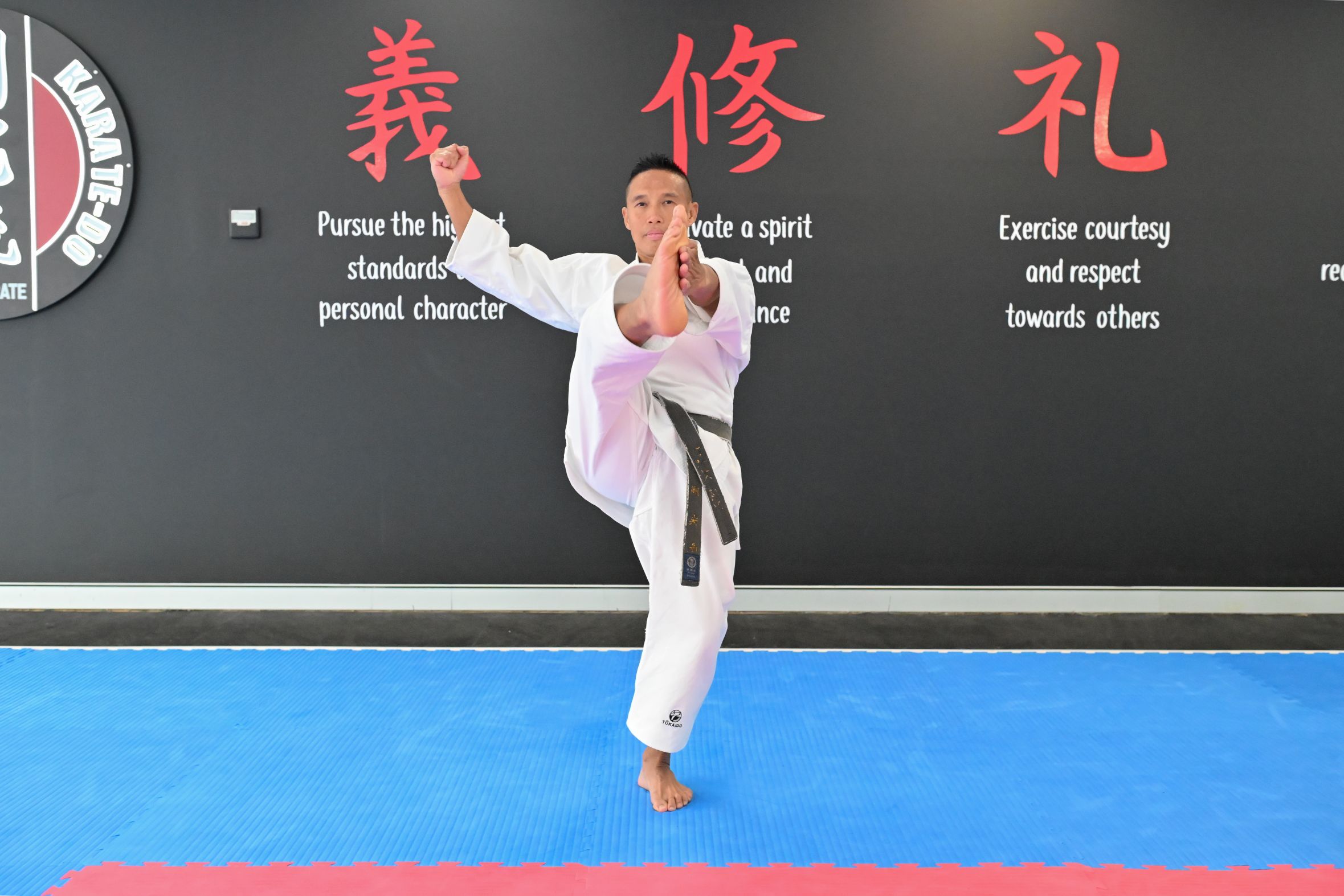
- Count 22: Mikazuki Geri (Crescent Kick) with Jo-Ge (Head-Groin) Sen-no-sen (Simultaneously Block and Strike)
- Counts 24 and 26: Oi Tsuki Hanmi (Lunge Punch with Hips at 45-Degrees)
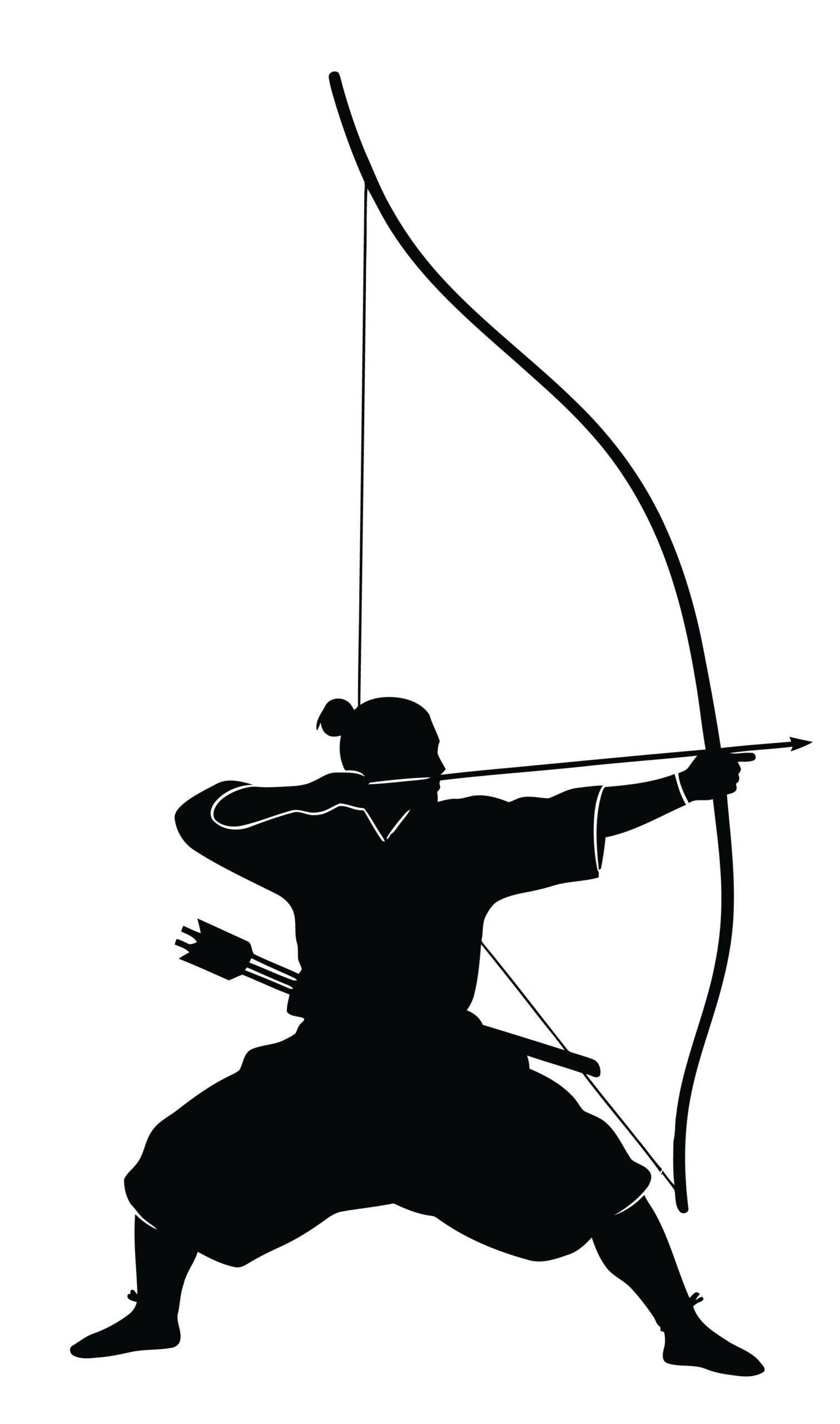
- Count 28: Kyudo Kai (Archer’s Draw)
History Of Sochin
Despite modern karate regarding Seisan as a Goju Kata and Sochin as a Shotokan kata, what is interesting to note is that tracing back their lineage, one discovers they both came from the same Okinawan source, and both kata date back further than most other karate kata. While most Naha-te based kata were introduced or developed by Chogun Miyagi (founder of Goju) or Kanryo Higaonna (founder of Naha-te and Miyagi’s instructor), Sochin was introduced further back by Higaonna’s instructor, Seisho Aragaki. Seisan was also taught by Aragaki but it is unlikely that he introduced it.
It is these two very old kata (Seisan and Sochin) that highlights how the much-debated topic of, ‘which modern style of karate studies the truest version of katas’, is a waste of time. No single style, regardless of its roots can claim that they teach the truest or purest version of any kata because every kata has been altered and modified over the generations.
So how is it that two kata of the same source could end up at different ends of the traditional karate spectrum?
Assuming you have already read up on Seisan kata, you are aware that its originator is unknown and that it was practised by several Okinawan karate forefathers. The most famous is the Goju based version, which is the version practiced in Go-Kan-Ryu. It is worthy of noting however, that even within Goju, after the death of Miyagi, a number of versions have arisen from his top students, and while similar, each has stamped their own individual interpretation of the kata.
When it comes to Sochin kata, while Aragaki taught Higaonna (founder of Naha-te), he moved away from Naha to teach his brand of karate to martial artists in the city of Shuri (the term ‘brand’ is used because Aragaki never formalized a style).
While he taught many kata and also a number of weapons kata, two kata he founded and taught that became widely popular in Shuri city were ‘Unsu’ and ‘Sochin’. Later when Aragaki returned to Naha, Goju had been formed and was the most popular style. For this reason, Sochin was not so popular in Naha.
Despite its Naha (Goju) origin, most styles that practise Sochin today come from a Shuri (Shotokan) lineage. This has most likely resulted in the stances growing deeper (note Goju styles use mostly ‘neko-ashi datchi’ cat stance) and the tempo hastened. That said, its Naha roots are still very apparent in the opening sequences where the same pattern of movements are performed three times, like many Naha or Goju kata eg. Saifa, Seiunchin, Sanseryu, Shisochin, Seisan etc, and the blocking in these sequences is done slowly and with strength.
Furthermore – in the opening sequences – the hips when performing the slower movements should push forward, much the way they push forward when performing opening sequences of Goju kata in Sanchin dachi.
One person who truly appreciated Sochin was Kenwa Mabuni (1889 – 1952), a master who later formulated the popular style of Shito-Ryu. Note that Shito-Ryu (like Go-Kan-Ryu) utilises many kata from both Naha origin and Shuri/tomari origin. Mabuni likely changed Sochin somewhat when formalising Shito-Ryu as most Shito-Ryu kata are quite different to the same kata practised in their native styles.
As with all kata, over time, variations were introduced. The version that is most popular throughout the world today and the version practiced by Go-Kan-Ryu, is the Shotokan version, which was developed by Yoshitaka Funakoshi, son of master Gichin Funakoshi, the founder of Shotokan. Funakoshi’s son trained under Mabuni, where he learned Sochin and introduced it into Shotokan after he lengthened the stances and introduced the high side-kicks.
Because Sochin has a number of different styles that practise it and as such, a number of different versions, it also has different translations. Common names are ‘Grand prize’, ‘Grand battle, ‘Strong calm’ and ‘Immovable’ kata (a name representing the fudo-datchi stance used throughout). The most common translation is ‘Strong Calm’ which is also a very Naha styled name. This name is indicative in the kata’s form given its use of ‘strong’ fudo- dachi stances combining with slow, calm blocks (tate shuto uke).
The Following Is The Most Likely Sochin Lineage To GKR
Seisho Aragaki (1840 – 1918)
Developed by Seisho Aragaki based on his experience in Okinawa-te (the indigenous art of Okinawa) and his training in White Crane Kung Fu. Arakaki was born in 1840 in either Kumemura village (a Chinese settlement on the island of Okinawa found near Naha), or on the nearby island of Sesoku. He was an official in the Royal Court of Okinawa and as such held the title of Chikudon Peichin (which denoted a status similar to that of the Japanese Samurai). On 24 March 1867, he demonstrated Okinawan martial arts in Shuri city, then the capital of the Okinawa, to a visiting Chinese ambassador; this was a notable event, since experts such as other notable martial artists were still active at that time. Aragaki served as a Chinese language interpreter and travelled to China in September 1870. His only recorded martial arts instructor from this period was Wai Xinxian who taught white crane kung fu in the Fujian province.
Kenwa Mabuni (1889 – 1952)
Born in Shuri city Okinawa in 1889, he began his instruction at the age of 13, under the tutelage of the legendary Yasutsune Anko Itosu, who also taught Gichin Funakoshi. Mabuni was close friends with Chojun Miyagi who would later create the style of Goju. Miyagi introduced Mabuni to his instructor Kanryo Higaonna, the founder of Naha-te, and he began training in Naha-te. Later, Mabuni would found the style of Shito-ryu by taking the aspects of Shuri-te and Naha-te and suiting them to his style and body structure. Mabuni also trained under Higaonna’s instructor, Seisho Aragaki, where he likely learnt Sochin.
Yoshitaka Funakoshi (1906 – 1945)
Yoshitaka is the son of the famous Gichin Funakoshi. He learned Sochin from Kenwa Mabuni and introduced it into Shotokan. Like most people who integrated a kata from another system, he modified it to suit the Shotokan system’s techniques and ideologies.
GKR Karate
While many styles incorporate Sochin, GKR derives its from Shotokan karate.